In the digital economy era, logistics is no longer merely about traditional transportation or warehousing. It has become the 'lifeblood' that defines the competitiveness of both nations and enterprises. However, a reality has persisted for years in the Vietnamese market: despite over 80% of businesses being aware of the importance of technology, the number of companies that have successfully implemented it remains remarkably modest.
Why is there such a gap between 'awareness' and 'action'? This article will provide an in-depth analysis of the core barriers and suggest a strategic roadmap for logistics enterprises in today's context.
1. The reality of digital transformation in Vietnam's logistics sector
The Vietnamese logistics industry is experiencing robust growth, fueled by the surge in e-commerce, import-export activities, and deeper international integration. However, the level of digitalization remains constrained. To date, only a few market leaders—such as Tan Cang Saigon, Viettel Post, and Vietnam Post—have successfully deployed advanced systems like electronic ports, WMS (Warehouse Management System), TMS (Transportation Management System), and ERP. These implementations have yielded significant improvements in processing times and cost efficiency.
In contrast, the vast majority of the industry, particularly SMEs (which account for approximately 89% of firms with capital under 10 billion VND), still depends on Excel spreadsheets, manual paperwork, and fragmented solutions. Survey results indicate a stark digital divide: only about 0.4% of enterprises have reached a high level of digital maturity (Level 6), while most are still in the initial or passive stages.
The benefits of digital transformation are undeniable: an average 23% reduction in logistics costs, a 35% decrease in order processing time, enhanced accuracy, and increased supply chain transparency. With such clear advantages for competitiveness, the critical question remains: Why is the actual adoption rate still so low?

2. Five major barriers hindering digital change in logistics
2.1. High investment costs and the ROI challenge
For small and medium-sized enterprises (SMEs)—which account for over 90% of the Vietnamese market—capital remains the primary challenge. Digital transformation involves more than just purchasing software; it requires significant investment in hardware infrastructure, cybersecurity, and ongoing maintenance costs.
Many businesses are concerned about the Return on Investment (ROI). Unlike purchasing an additional truck, which generates immediate and visible revenue, investing in a Transportation Management System (TMS) or Warehouse Management System (WMS) delivers value through operational optimization and risk mitigation. These benefits often require a longer period to be accurately quantified in monetary terms.
2.2. Data fragmentation and lack of standardization
The Vietnamese logistics industry is characterized by the involvement of numerous stakeholders: from shippers and carriers to warehouse operators and government agencies such as Customs and Port Authorities.
Currently, data synchronization among these parties is lacking. Enterprises fear that if they undergo digital transformation in isolation while their supply chain partners continue to rely on manual methods (paperwork, email, or messaging apps), their systems will not achieve maximum effectiveness. This lack of data standardization makes system integration more complex and costly than ever before.
2.3. Human resources and management mindset barriers
Technology serves as a tool, but human capital is the driver of operation. A concerning reality is that the traditional logistics workforce often lacks essential digital literacy. Shifting habits from manual bookkeeping to system data entry, and from experience-based management to data-driven decision-making, frequently encounters significant internal resistance.
Furthermore, many business leaders maintain a "wait-and-see" approach. They hesitate, waiting for others to pioneer the path before learning from them. However, in the technological race, being a latecomer often results in losing a vital competitive advantage in terms of operational speed and transparency.
2.4. Data privacy and information security concerns
In the logistics sector, data regarding routes, customers, and pricing structures are considered vital assets. Many enterprises are apprehensive about migrating data to cloud-based platforms or sharing information across integrated networks, fearing potential data leakage to competitors. A lack of in-house cybersecurity experts further increases this sense of unease when taking significant technological leaps.
2.5. Lack of a structured digital transformation roadmap
The majority of Vietnamese logistics firms implement technology through a "reactive" or "patchwork" approach. When warehouse operations become chaotic, they purchase a WMS; when fleet efficiency drops, they install GPS tracking. This fragmented methodology prevents software systems from communicating effectively, creating "information silos." This leads to overlapping investments that fail to address the root cause of operational inefficiencies.

3. Digital transformation: Not an exclusive domain for large corporations
There is a common misconception that only multinational corporations require and can afford digital transformation. In reality, Vietnamese logistics enterprises can begin with a much leaner and more agile roadmap.
Instead of immediately investing in a massive, comprehensive ERP system, businesses can focus on addressing the most inefficient "touchpoints" or areas of waste. For example:
- Digitizing documentation (e-DO, e-AWB): Minimizing manual errors and significantly reducing processing wait times.
- Applying AI for route optimization: Saving an average of 10-15% in fuel costs through smarter navigation and load planning.
- Building Real-time Dashboards: Enabling leadership to make data-driven decisions based on live insights rather than relying on intuition or guesswork.
4. Overcoming the hurdles: Strategic solutions for Vietnamese logistics firms
To ensure effective implementation and sustainable growth, enterprises should adopt the following strategies:
- Start Small, Scale Gradually: Begin by deploying core modules—such as freight management, CRM, and integrated accounting. Once these systems are stabilized, businesses can expand into more complex layers like WMS (Warehouse Management System) and TMS (Transportation Management System).
- Partner with Reputable Providers: Prioritize vendors who demonstrate a deep understanding of the Vietnamese logistics landscape. A reliable partner should offer high levels of customization, comprehensive staff training, and committed long-term maintenance.
- Invest in Human Capital: Bridging the digital gap requires a dual approach—combining intensive internal training for existing staff with the strategic recruitment of tech-savvy talent.
- Leverage Government Support Policies: Actively monitor and utilize programs from the Ministry of Industry and Trade (MoIT), the National Innovation Fund, and high-tech tax incentives designed to facilitate digital adoption.
- Develop a Concrete Roadmap: Every digital journey must start with a thorough assessment of current capabilities. Establish specific KPIs and implement a framework for periodic performance measurement to ensure the project stays on track and delivers measurable value.
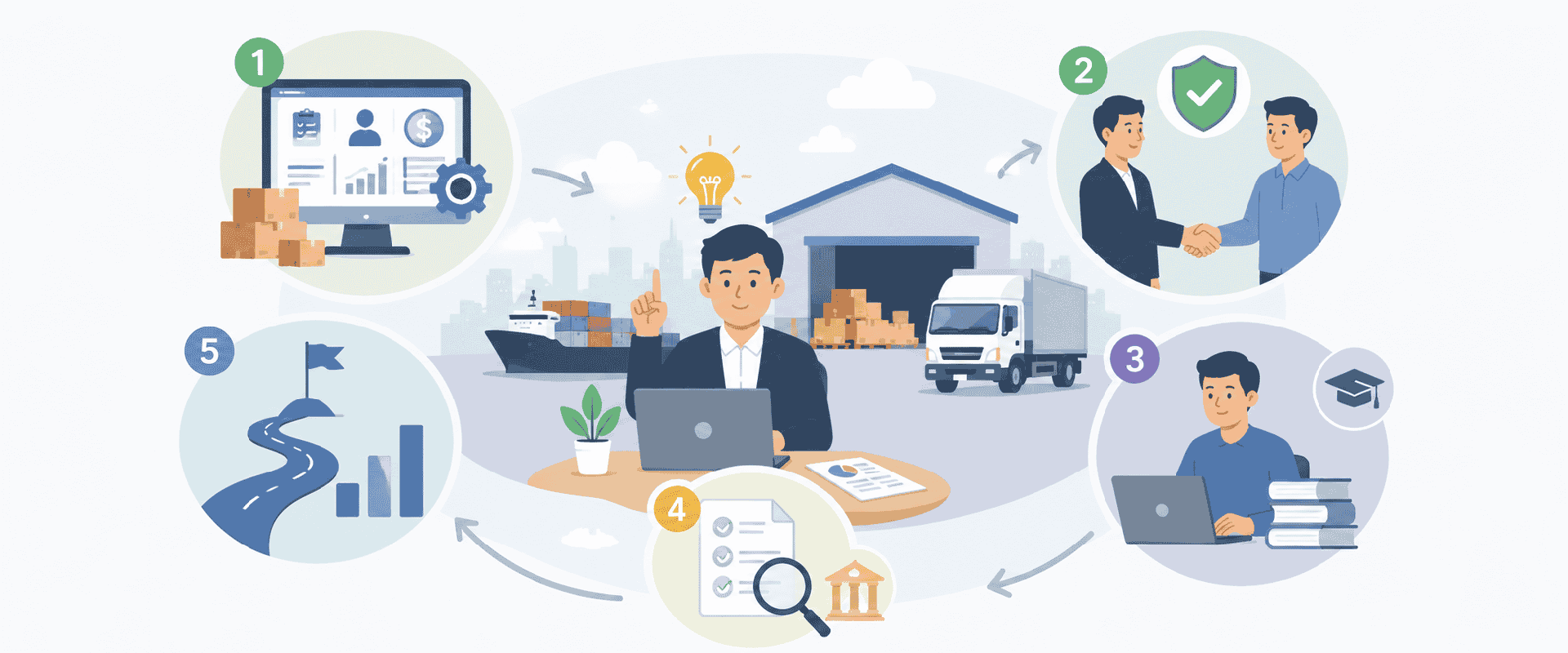
5. Sota Solutions – Empowering Vietnam's logistics enterprises
In a landscape filled with complex hurdles, choosing the right partner is the decisive factor for a successful digital transition. Sota Solutions specializes in providing AI-integrated ERP and CRM solutions specifically tailored for the logistics and freight forwarding industry in Vietnam. With over 20 years of experience in system implementation for both domestic and international enterprises, Sota Solutions delivers practical, high-impact solutions, including: Sota FMS – A comprehensive freight management system (job/shipment management, CRM, specialized accounting, intelligent reporting, and automated AI-OCR technology) và Sota CRMlog.
Our solutions are designed with the flexibility to suit the scale of SMEs, ensuring cost optimization while maintaining full compliance with Vietnamese legal and accounting regulations. Beyond providing software, Sota Solutions is committed to a professional implementation process, offering intensive training and long-term technical support. Numerous logistics firms have successfully digitized their operations, optimized workflows, and significantly enhanced business performance through their strategic partnership with Sota Solutions.
6. Conclusion
The statistic that 80% of enterprises are aware of digital transformation but remain inactive reflects a prevailing hesitation toward change. However, in an era where foreign competitors with formidable technological resources are rapidly entering the Vietnamese market, inertia is the single greatest risk.
Obstacles concerning capital, human resources, and technology are surmountable with the right strategic partner and a phased, disciplined roadmap. Digital transformation is not a finite destination—it is a continuous journey toward operational excellence and value creation.
Are you looking for an optimal digital transformation roadmap for your logistics enterprise?
Contact Sota Solutions’ expert team today for an in-depth consultation and a personalized digitalization strategy tailored to your specific business needs!