In the context of digital transformation in Vietnam, many enterprises are weighing the choice between standalone accounting software and a comprehensive ERP system. This article provides a clear analysis of the differences in scope, features, and benefits, while identifying key indicators to help businesses determine the optimal time to upgrade and ensure full compliance with Ministry of Finance regulations.
1. What is accounting software? What is ERP software?
What is accounting software?
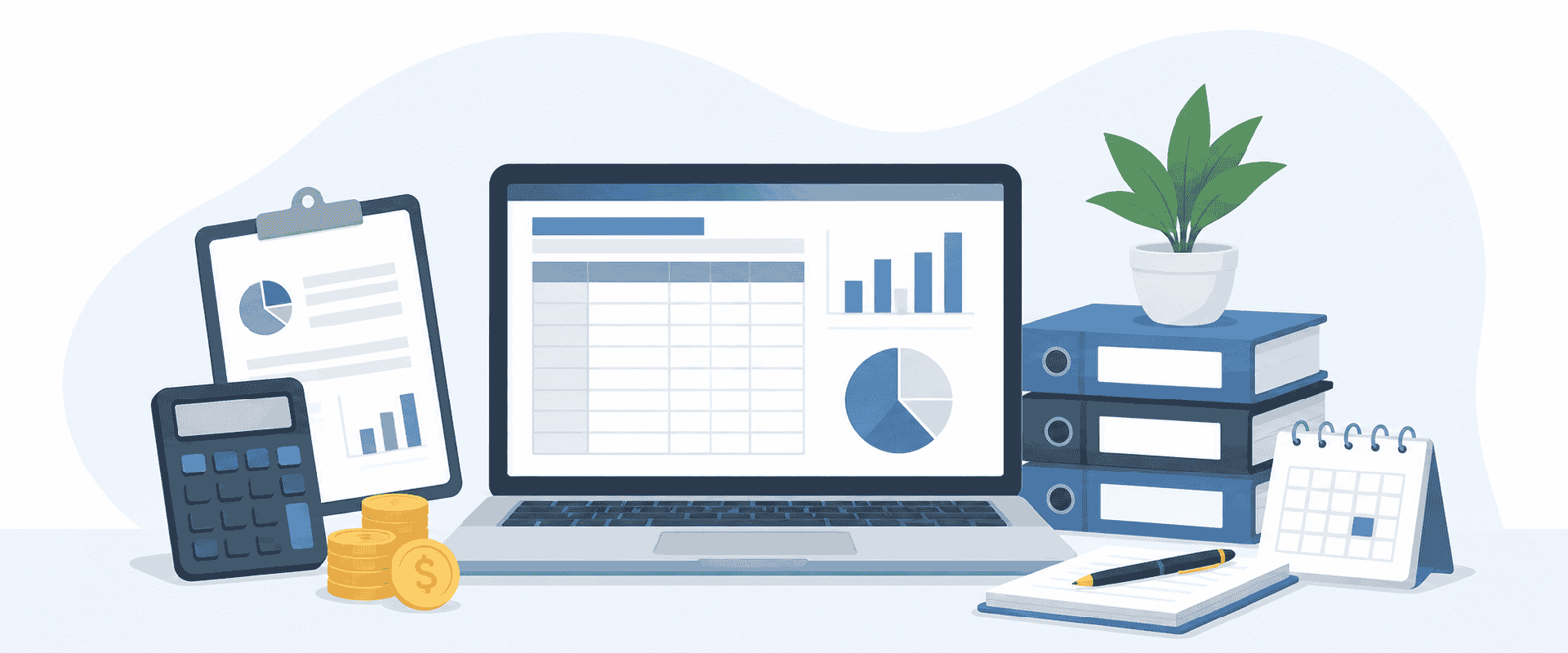
Accounting software is a specialized solution designed to handle financial operations. The core focus of this system is to record economic transactions, manage cash flow, track accounts receivable/payable, calculate taxes, and generate financial reports in accordance with legal regulations (such as Circular 200/2014/TT-BTC or 133/2016/TT-BTC in Vietnam).
The scope of accounting software is primarily confined within the accounting department. Input data usually consists of invoices and vouchers that have already been issued, meaning the software acts as a tool to "record what has already occurred.
What is ERP software?
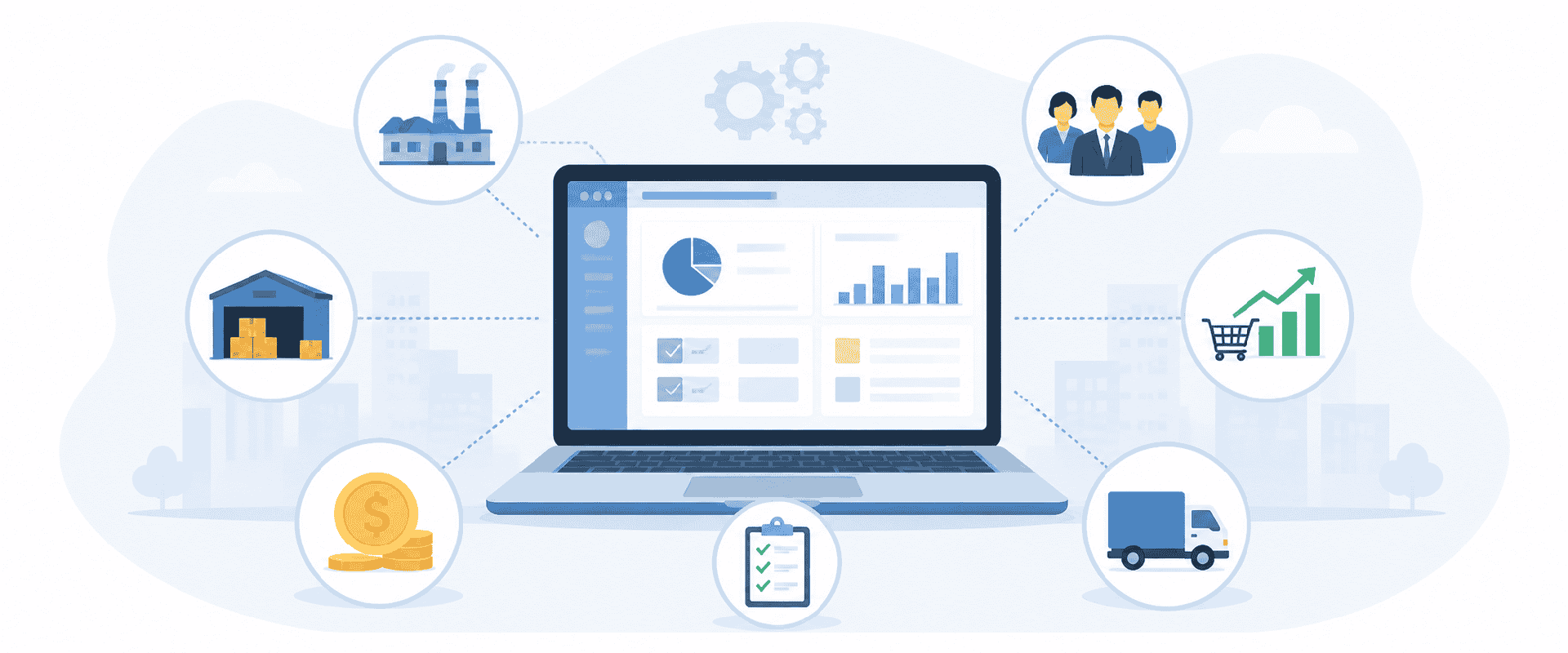
ERP stands for Enterprise Resource Planning. As the name suggests, ERP is not just for accounting; it is a unified system that integrates all departments: from Purchasing, Sales, and Inventory to Manufacturing, Human Resource Management (HRM), and Customer Relationship Management (CRM).
In an ERP system, accounting is merely a central module. The most significant difference is that data in an ERP flows seamlessly in real-time. For instance, when the sales department closes a deal, the system automatically deducts inventory, creates a warehouse release order, and simultaneously records revenue and debt for the accounting department without the need for manual data reentry.
2. Detailed comparison: Accounting software vs. ERP system
To provide a visual perspective for businesses, let’s compare these two solutions across key criteria:
Criteria | Accounting Software | ERP System |
Scope | Focuses solely on finance, taxes, and bookkeeping. | Comprehensive, covering all business activities. |
Integration | Typically standalone. Requires manual entry or middleware to connect with inventory or sales. | Fully integrated. Data is centralized and consistent across all departments. |
Reporting Capabilities | Financial statements, tax reports, and balance sheets. | Multi-dimensional management reports, business forecasting, and performance analytics (KPIs). |
Data Timeliness | Records data after transactions have been completed. | Updates data in Real-time at the moment the transaction occurs. |
Scalability | Limited; usually only supports upgrades to accounting features. | Flexible; modules can be added or removed according to business scale. |
ERP excels in its ability to automate data synchronization. For example, upon completing a sales order, the system automatically updates inventory levels, generates accounting entries, and issues invoices without manual intervention. This significantly reduces errors compared to using standalone accounting software.
3. Core differences managers should note
Single source of truth (Data consistency)
With fragmented accounting software, each department often operates in its own "data silo." The warehouse team might use Excel files, the sales team uses a separate CRM, and the accounting team uses their own software. At the end of the month, these departments must manually reconcile data, often leading to discrepancies, mismatches, and significant time wastage.
An ERP system solves this fundamentally by utilizing a single centralized database. A change in the production module instantly impacts the finance module. This eliminates duplicate data entry and human error entirely.
Process management vs. Financial recording
Accounting software answers the question: "How much money do we have left?". ERP answers the questions: "Why is that all the money we have left?" and "How can we optimize our production process to increase profitability?".
ERP helps standardize operational workflows. For instance, a purchase approval process must follow specific steps: from a Request for Quotation (RFQ) and purchase order approval to receipt of goods, quality inspection, and finally, payment. Every step is strictly controlled by the system, preventing losses, leakages, and procedural irregularities.
Customizability and Local compliance
Many businesses worry that international ERP systems might not meet Vietnam's specific accounting standards. However, reputable implementation partners like Sota Solutions have successfully localized leading ERP solutions (such as Odoo). This ensures full compliance with the Ministry of Finance's Circulars while maintaining the system's powerful global management capabilities.
4. When should your business upgrade to an ERP system?
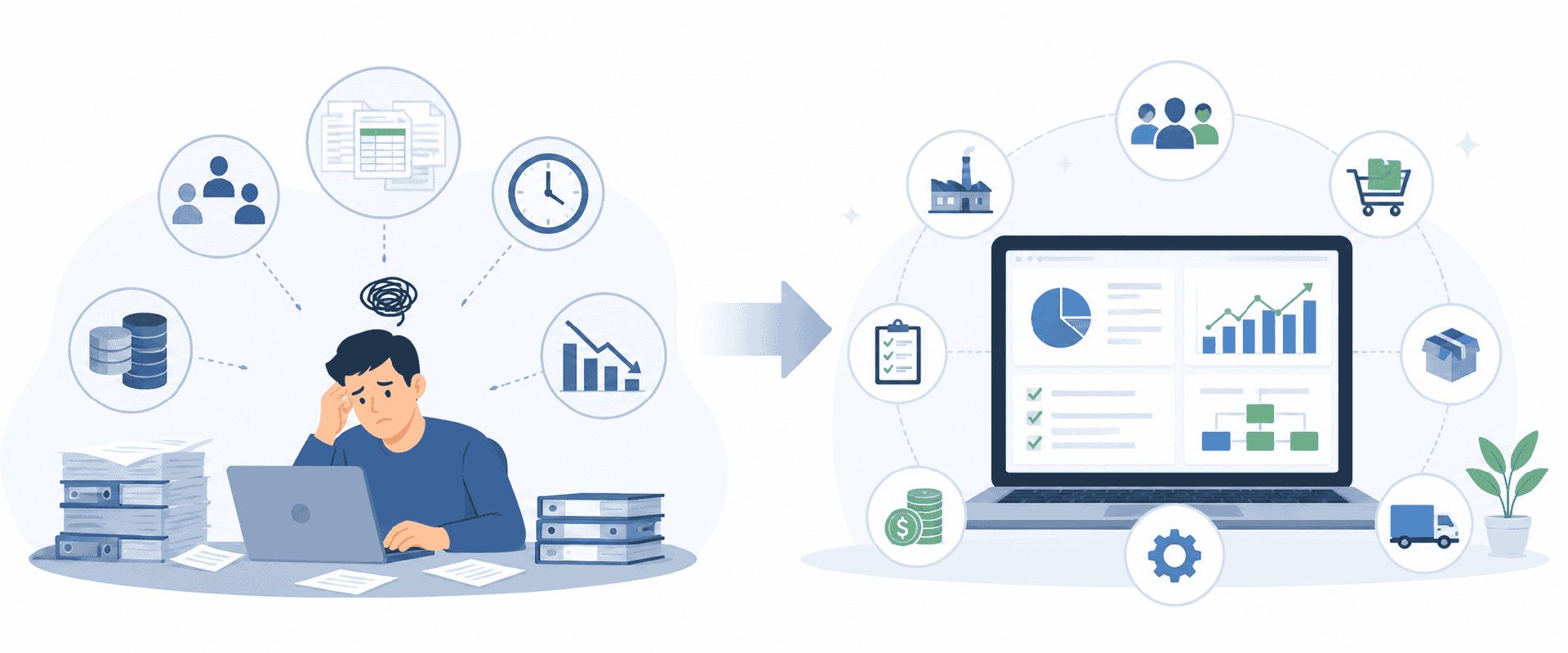
Transitioning from accounting software to an ERP system is a significant milestone in terms of both investment and resources. Businesses should consider an upgrade when the following "red flags" begin to appear:
Frequent data fragmentation and inconsistencies
If leadership spends excessive time waiting for staff to consolidate reports from multiple disconnected sources, or if inventory figures consistently mismatch between the accounting department and the warehouse, it is a clear sign that you need an integrated system.
Overloaded manual processes
As order volumes grow, manually entering data from Excel files into accounting software becomes unsustainable. This bottleneck leads to critical errors that can directly damage your reputation with customers and partners.
Challenges in cost and inventory control
An upgrade is necessary when a business can no longer capture exact product costs—due to an inability to aggregate direct production costs, labor, and machinery depreciation in real-time—or frequently faces "stockouts" even when the system shows available inventory.
Demands for advanced management reporting
When your requirements extend beyond basic tax compliance to include in-depth performance analytics (by employee or market region) and 6-month cash flow forecasting, standalone accounting software will no longer suffice.
For enterprises in manufacturing, logistics, trading, or retail, ERP delivers exceptional value by streamlining complex supply chains and operational workflows that simple accounting tools cannot handle.
5. Choosing a reputable ERP implementation partner in Vietnam
Implementing an ERP system requires a partner with deep expertise in Vietnamese business processes, a clear understanding of industry-specific challenges, and a commitment to ensuring full compliance with the Ministry of Finance's (MOF) accounting standards.
Sota Solutions is a trusted and professional ERP consulting and implementation firm with over 10 years of experience. As a strategic partner of Odoo in Vietnam, Sota Solutions provides comprehensive, integrated ERP solutions. Our offerings include accounting modules localized to meet MOF Circular standards, specifically tailored for various sectors such as logistics, manufacturing, retail, and services.
With a team of seasoned experts who have successfully delivered projects for major domestic and international clients, Sota Solutions is committed to providing flexible, customized systems. We offer dedicated training and professional post-implementation support to ensure your business achieves a seamless digital transformation and reaches optimal operational efficiency.
6. Conclusion: Making the right move for sustainable growth
Accounting software is ideal for the initial growth stages or small enterprises focused primarily on financial compliance. However, as an organization expands and requires synchronized management alongside data-driven insights, an ERP system becomes an essential strategic investment.
Upgrading is more than just a change of tools; it represents a fundamental shift in management philosophy, empowering businesses to remain competitive and agile in the digital era.
If your business is struggling with data synchronization or looking for a tailored ERP solution, Sota Solutions is ready to partner with you, offering free consultations and live system demonstrations. Liên hệ ngay hôm nay to evaluate your requirements and build an optimized implementation roadmap for your business.