In an era of constant global supply chain volatility, the logistics industry in Vietnam is facing unprecedented pressures. Delivery speed, thin profit margins, and the complexity of last-mile operations demand a fundamental shift in management mindset. However, many 3PLs, 4PLs, and freight forwarders are still struggling with fragmented software (Excel, standalone warehouse systems, and isolated accounting software).
This disjointed management model creates numerous systemic loopholes. For this reason, enterprises must transition to specialized Logistics ERP software. This article will analyze the core management challenges that a dedicated ERP solution can completely resolve.
1. Limitations of general ERP systems regarding logistics-specific requirements
Many enterprises often deploy general ERP systems with the expectation of managing the entire organization. However, these solutions are only capable of effectively analyzing financial, human resource, or general procurement metrics, completely lacking the configurable modules required for specialized logistics operations.
The logistics industry is highly specific, operating on variables that change in real time. Tasks such as route optimization, empty container turnaround management, multimodal transport costing, or controlling port-related charges (demurrage/detention) demand a completely different data architecture. When the management system fails to address these specific requirements, enterprises face information disruption between field operations and the executive office.
2. 4 Core challenges completely resolved by specialized logistics ERP
A specialized Logistics ERP software solution is not merely a data entry tool; it is a management architecture that reshapes the entire flow of information and corporate assets by addressing the following four critical management challenges:
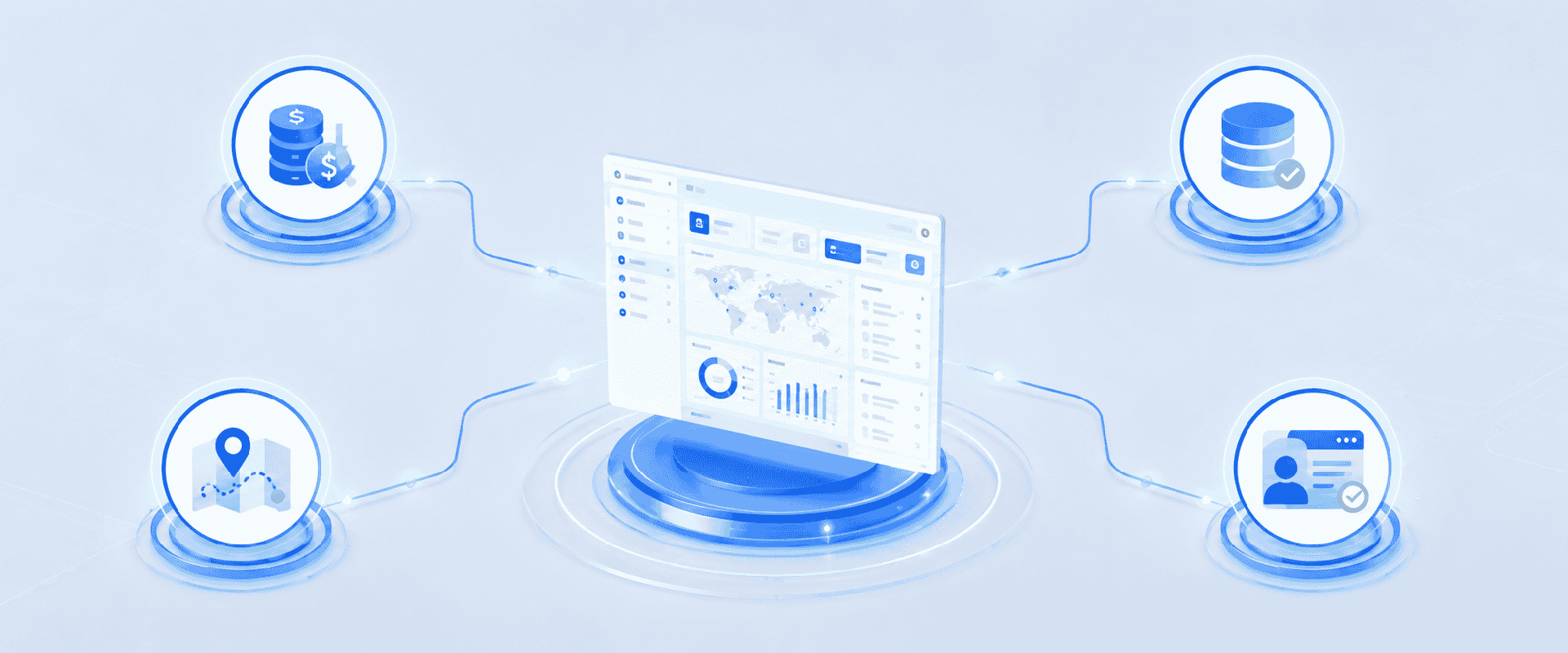
Challenge 1: Controlling operational cost leakage and automating the revenue cycle (Profitability & Billing)
The average net profit margin in the logistics industry remains thin. Financial leakage primarily stems from the manual management of incidental expenses:
- Actual incidental costs: Demurrage and detention fees, en-route vehicle repairs, or out-of-pocket expenses incurred by drivers outside fixed allowances.
- Billing Errors: The workflow from order completion to B2B invoicing passes through multiple intermediaries, leading to delayed accounts receivable recovery or omitted surcharges.
How specialized logistics ERP resolves this:
The system automates the entire Order-to-Cash (O2C) cycle. Fixed cost benchmarks are pre-configured within the system. When drivers or field personnel update actual incurred costs via mobile applications, data synchronizes instantly with the central headquarters. The accounting department can automatically reconcile workloads and expenses with high precision, shortening the cash flow cycle and minimizing errors.
Challenge 2: Centralizing data standardization and eliminating data isolation
Data asymmetry occurs when the sales department provides quotes without visibility into fleet capacity, or when the warehouse team lacks accurate vessel arrival schedules to allocate labor for unloading.
How specialized logistics ERP resolves this:
The software integrates all industry-specific management modules—including OMS (Order Management System), WMS (Warehouse Management System), TMS (Transportation Management System), FMS (Freight Forwarding Management System), and Financial Accounting—into a unified database. Once a transport order is confirmed, warehouse status and accrued revenue metrics are updated automatically. Executives can monitor all Key Performance Indicators (KPIs) through a management dashboard updated in real time.
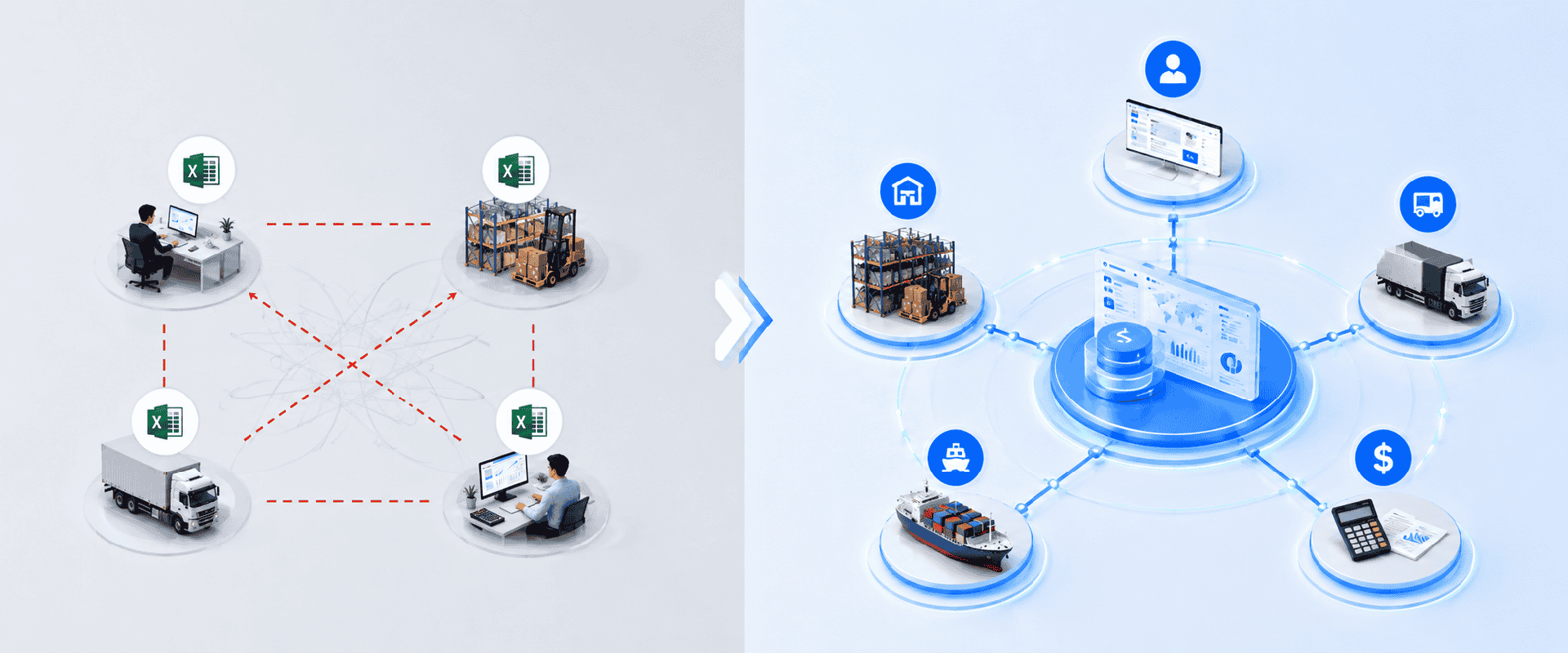
Challenge 3: Optimizing transportation capacity and warehouse asset management
How can enterprises minimize empty backhaul rates? How can warehouse layouts be optimized based on throughput frequency to reduce vehicle waiting times? These are geometric and routing optimization challenges that cannot be efficiently calculated by human experience alone.
How specialized logistics ERP resolves this:
Specialized systems utilize intelligent algorithms to automatically generate Load Optimization plans for vehicles/containers and execute Route Optimization. For warehousing, the ERP analyzes historical data to automatically suggest optimal Slotting, increasing loading and unloading efficiency by 30% while maximizing storage space utilization.
Challenge 4: Enhancing B2B customer experience and retention
For corporate clients, information visibility is the core criterion used to evaluate a logistics provider's service quality. Checking order statuses through manual methods (phone calls, emails) increases administrative labor costs for both parties.
How specialized logistics ERP resolves this:
The system provides a dedicated Customer Portal. Through this platform, B2B partners can proactively monitor shipments via Real-time Tracking enabled by GPS integration and IoT sensors. They can also automatically download electronic documents (bills of lading, invoices, customs declarations) without intermediaries, significantly reinforcing corporate brand credibility.
3. The paradigm shift: Integrating artificial intelligence (AI) into logistics ERP
Currently, specialized Logistics ERP solutions are rapidly evolving toward Artificial Intelligence (AI) integration. Unlike traditional legacy systems that merely record historical data, AI-powered ERP features big data capabilities to generate Predictive Analytics models.
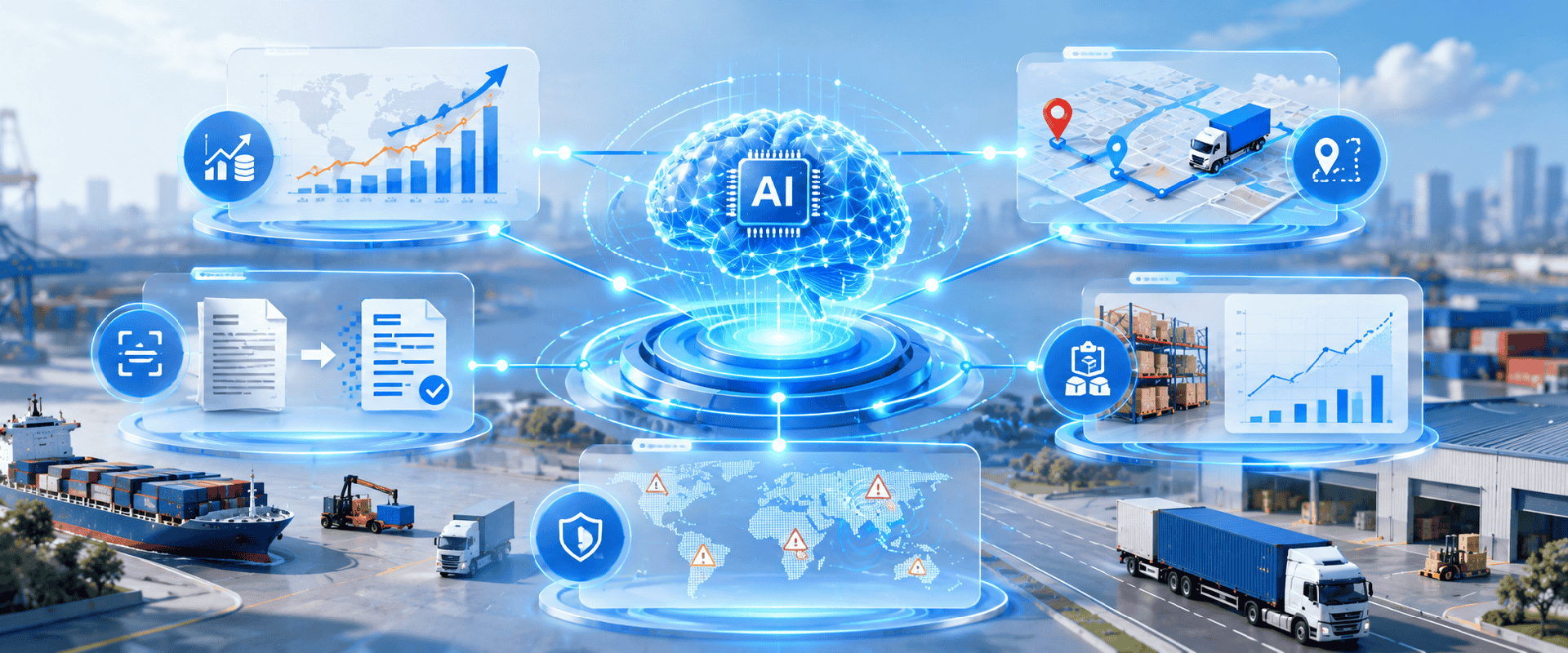
This technology supports enterprises in forecasting freight rate fluctuations, providing early warnings for traffic bottlenecks, optimizing safety stock levels, and utilizing intelligent algorithms for automated document processing (AI OCR), thereby minimizing administrative processing times.
To successfully deploy this digital management model, enterprises require a highly competent implementation partner. As a specialized consultant and provider of ERP solutions for the logistics industry, Sota Solutions delivers a comprehensive logistics enterprise management software, that addresses specific operational workflows and comes pre-integrated with advanced automation technologies. The solution from Sota Solutions enables enterprises to comprehensively digitalize their operational processes and systematically optimize costs.
4. Conclusion
Resolving the core challenges within the logistics industry requires a management system capable of high data synchronization and deep industry-specific expertise. Investing in specialized Logistics ERP software enables enterprises to transition from experience-based management to a data-driven model, ensuring sustainable competitive advantages in the modern supply chain.