In the face of global economic volatility and increasingly complex supply chains, logistics and manufacturing enterprises in Vietnam are confronting a critical challenge: How to streamline operations, minimize hidden costs, and enhance market responsiveness?
The answer lies in the implementation of Enterprise Resource Planning (ERP) systems. Far beyond traditional accounting or human resource management, modern ERP serves as a central 'operating system' that automates the entire flow of goods and information—from procurement to last-mile delivery to the end consumer.
1. What is ERP? - Its role in connecting the modern supply chain
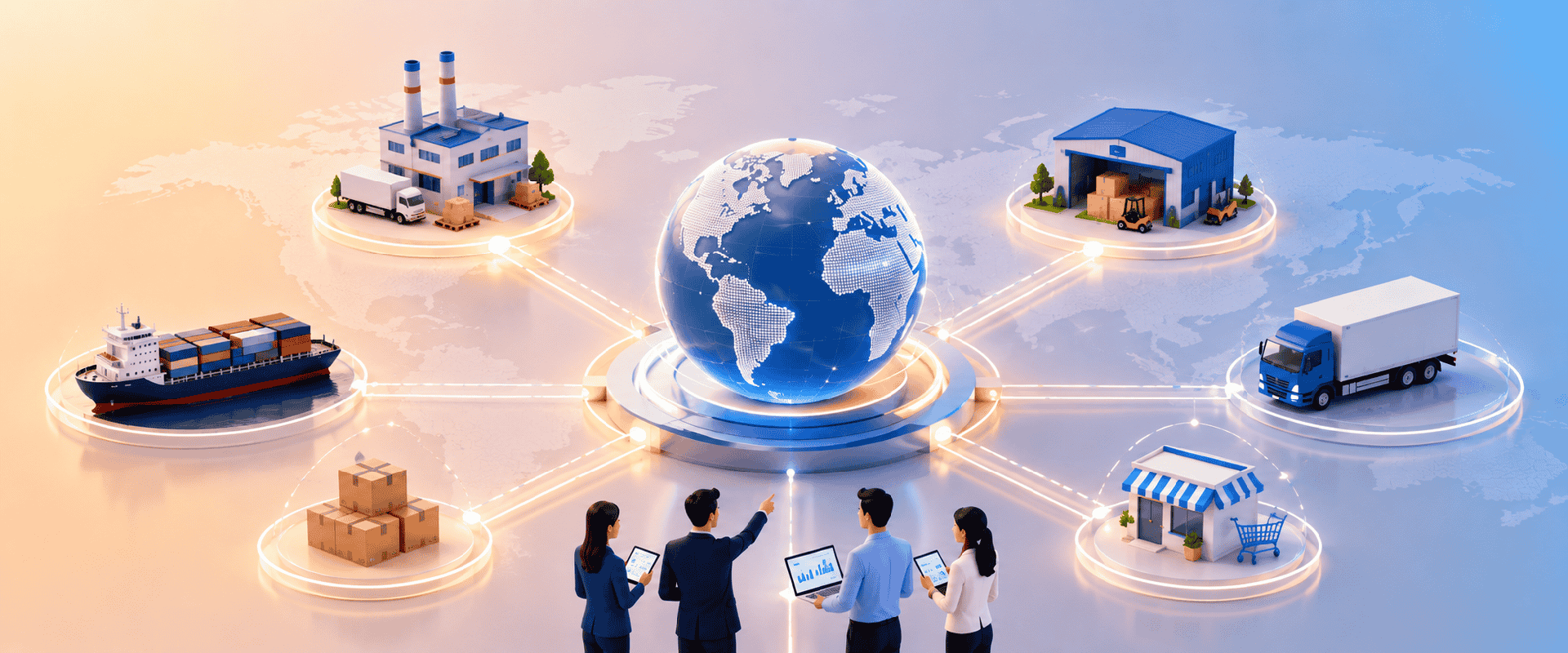
ERP, or Enterprise Resource Planning, is a system that integrates all core business processes into a single, unified platform. Unlike fragmented software solutions, ERP seamlessly connects various modules such as procurement, warehousing, production, finance, sales, and logistics.
Traditional Supply Chain Management (SCM) often faces the challenge of "data silos." When information is disconnected between procurement, warehousing, and sales departments, businesses are highly susceptible to ghost inventory, delivery delays, or documentation errors.
An ERP system resolves these issues by consolidating every module into one centralized database. When an order is initiated, data automatically flows through all relevant departments in real-time. This serves as the essential foundation for achieving comprehensive supply chain automation.
2. The automated workflow: from supplier ordering to customer delivery
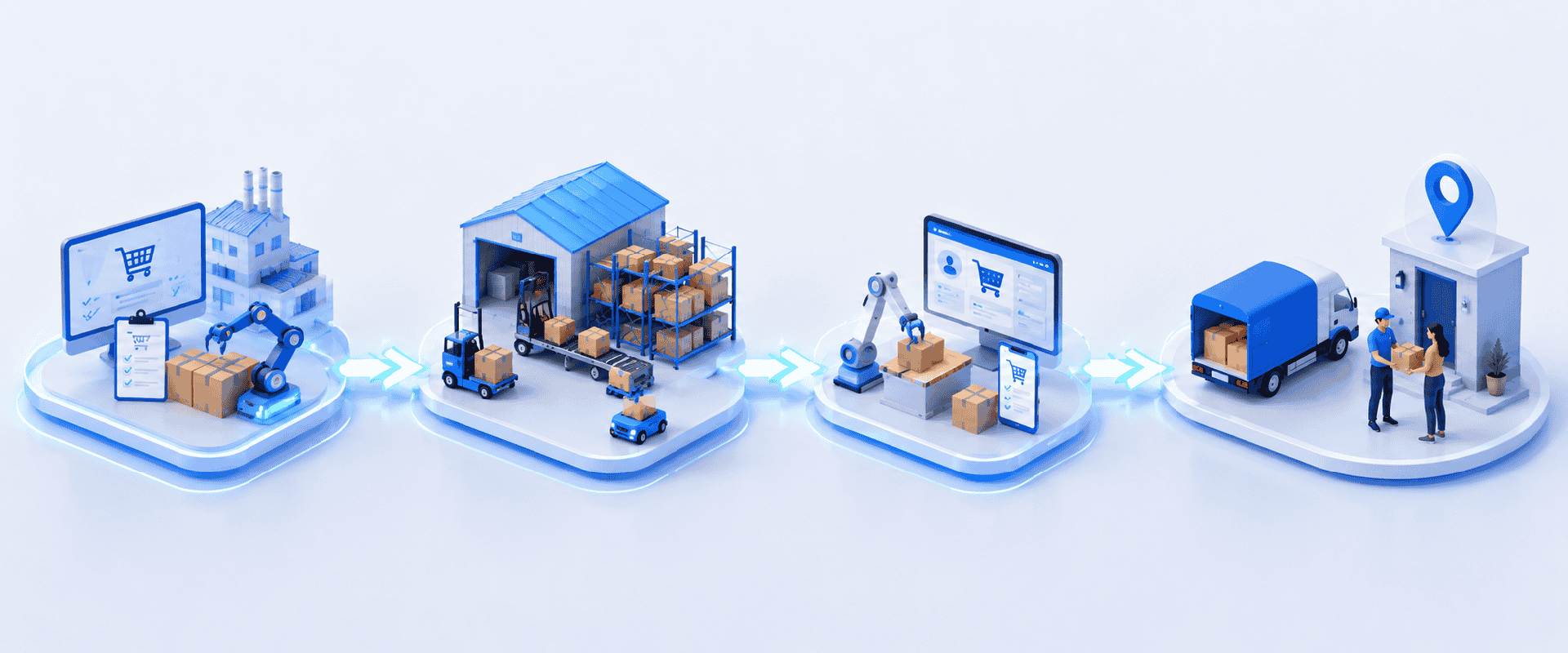
2.1. Procurement automation
The first stage of the supply chain begins with vendor interaction. ERP automates this process through:
- Smart demand forecasting: Based on historical sales data and market fluctuations, the ERP system provides suggestions on order quantities, helping to prevent stockouts or overstocking.
- Automated purchase order (PO) generation: When inventory levels fall below the safety stock threshold, the system automatically initiates a PO and routes it to pre-approved suppliers.
- Vendor performance management: ERP stores data regarding lead times, product quality, and pricing for each partner, enabling businesses to evaluate and select the most optimal suppliers.
2.2. Automated warehouse and inventory management
Warehousing is often the most cost-intensive area if not managed efficiently. ERP-driven automation ensures absolute precision:
- Rapid inbound processing: Integrating Barcode/QR Code technology with the ERP system allows for goods inspection and classification in seconds, with data updated directly to the system.
- Storage optimization: ERP designates storage locations based on turnover frequency (utilizing FIFO/LIFO rules), optimizing space and significantly reducing picking time.
- Real-time inventory control: Businesses maintain constant visibility of actual stock levels, minimizing the risk of loss, leakage, or inventory obsolescence.
2.3. Sales and order processing automation
When a customer places an order, the ERP acts as the central coordinator:
- Automated order confirmation: The system instantly verifies inventory availability and customer credit limits to approve orders immediately.
- Seamless data integration: A Sales Order (SO) automatically triggers warehouse release and packing commands, ensuring absolute information consistency between the sales and warehouse departments.
2.4. Delivery and last-mile fulfillment
Customer satisfaction depends heavily on the delivery stage. ERP supports this through:
- Transportation planning: Automatically coordinating vehicles and calculating the shortest delivery routes to save on fuel and time.
- Real-time tracking: Integration with GPS devices or mobile applications allows both the business and the customer to monitor the order's location in real-time.
- Automated documentation: The system automatically generates invoices, delivery orders (DO), and related shipping documents the moment goods leave the warehouse.
3. Strategic advantages of ERP-Driven supply chain automation
The transition from manual management to ERP-based automation delivers distinct and quantifiable value to enterprises:
3.1. Reduction in operating costs and inventory holdings
According to industry reports, implementing an ERP system can help businesses reduce inventory costs by up to 20% through precise market demand forecasting. Automation minimizes the need for personnel dedicated to repetitive data entry, thereby optimizing administrative overhead and operational expenditures.
3.2. Enhanced accuracy and market responsiveness
Discrepancies between physical stock and digital records are a major hurdle in logistics. With ERP, data is automatically synchronized at every touchpoint, ensuring that order error rates approach zero. Faster order processing cycles directly translate into a more robust competitive edge in a fast-paced market.
3.3. Data-Driven decision making
Integrated Business Intelligence (BI) tools within the ERP system provide a holistic view of supply chain performance. Executives can effortlessly track critical Key Performance Indicators (KPIs)—such as vendor performance, inventory turnover ratios, and On-Time Delivery (OTD) rates—with just a few clicks.
4. Challenges and the roadmap to successful ERP implementation in logistics
While the benefits are substantial, ERP implementation is a complex undertaking, particularly for logistics enterprises in Vietnam that manage highly specific and intricate operational processes.
A common pitfall occurs when businesses opt for fragmented software or overly expensive international solutions that fail to align with local accounting regulations and operational requirements (such as specific tax circulars and customs procedures). Therefore, selecting a consultancy and implementation partner with a deep understanding of the Vietnamese market is a decisive factor for success.
Sota Solutions is proud to be a trusted partner in the digital transformation journey of logistics enterprises. As a leading provider of comprehensive ERP implementation and consulting services, Sota Solutions delivers systems specifically optimized for the transportation and supply chain industries, including:
- Sota FMS - A specialized ERP software tailored for the logistics industry
- Sota CRMlog - A specialized CRM solution designed for the unique needs of logistics providers
We go beyond providing software; we offer strategic consulting to standardize business processes. This enables Vietnamese logistics firms to operate efficiently according to international standards while ensuring maximum flexibility and strict local regulatory compliance.
5. Key considerations for a successful ERP implementation
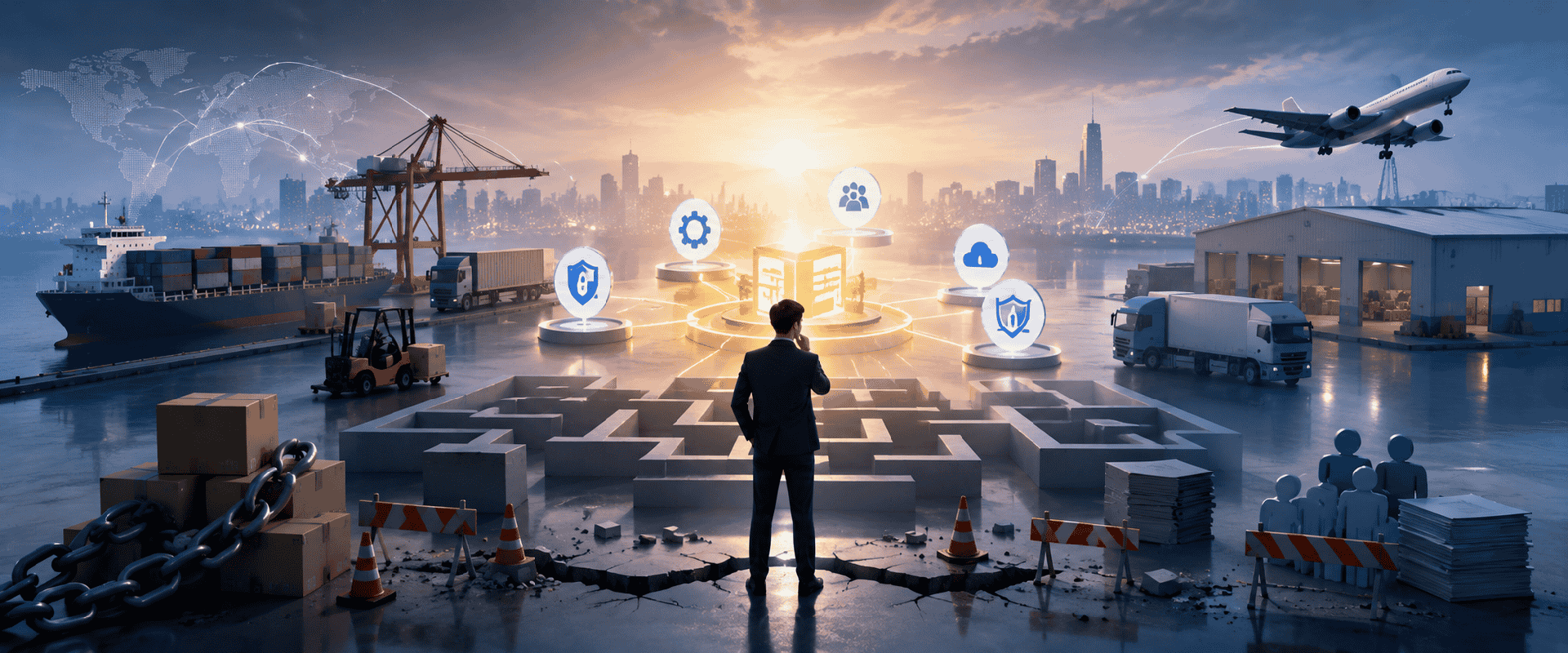
To achieve successful automation, enterprises must focus on three core pillars:
- Input data quality: An ERP system is only as effective as the data it processes. It is critical that product catalogs, vendor details, and customer databases are standardized and accurate from the very beginning.
- Team readiness: Digital transformation is not merely a change in tools but a fundamental shift in mindset. Ensuring that personnel are well-trained and ready to adapt to new automated workflows is a non-negotiable prerequisite.
- Selecting a flexible platform: Supply chains are inherently dynamic. Therefore, the chosen ERP system must be scalable and capable of seamless integration with emerging technologies such as AI and IoT to remain future-proof.
6. Conclusion
Managing the supply chain through an ERP system is an inevitable journey for any business aiming for comprehensive automation. From optimizing vendor relationships to delivering maximum value to the end customer, ERP acts as the central coordinator, ensuring every operation runs with harmony and precision.
If your business is searching for the right path on the logistics digital transformation roadmap, let Sota Solutions be your strategic partner. With our deep understanding of the Vietnamese market and superior technological expertise, we are ready to help you build the smartest, most modern, and most efficient supply chains.