In Vietnam’s logistics industry, small-scale transport enterprises—those managing fleets of 10 to 20 vehicles—frequently face a challenging dilemma: maintain traditional management models to save costs or invest in technology to achieve a competitive breakthrough. Many business owners still hold the misconception that a Transportation Management System (TMS) is reserved exclusively for 'industry giants' with hundreds of vehicles and massive budgets.
However, against the backdrop of volatile fuel prices, fierce freight rate competition, and rising customer expectations, a critical question arises: Is a 10–20 vehicle fleet truly 'too small' for TMS adoption? This article provides an in-depth analysis of both economic and operational perspectives to clarify the true value of a TMS for small transport operators.
1. The current management state of transport enterprises with 10–20 vehicles
With a fleet size ranging from 10 to 20 units, businesses often find themselves in an "awkward" middle ground. This scale is large enough to trigger complex operational issues but not yet large enough to justify a highly specialized management structure.
Typical "Pain Points":
- Reliance on Memory and Manual Logs/Excel: Dispatching, scheduling, and driver management rely heavily on the personal experience of the dispatcher. When order volumes spike, these manual systems frequently lead to errors, scheduling conflicts, or missed orders.
- High Hidden Costs: Expenses such as abnormal fuel consumption, empty miles, or unplanned maintenance are often not accurately tracked, directly eroding profit margins.
- Difficulties in Real-time Reporting: Business owners often spend excessive time consolidating end-of-month data just to understand the revenue and costs associated with each individual vehicle.
- Lack of Transparency for Customers: Today’s customers demand full visibility into cargo location and delivery times. Answering the question "Where is my shipment?" via manual phone calls to drivers is an inefficient and unprofessional process.
2. What is a TMS and What role does it play in the modern supply chain?
A Transportation Management System (TMS) is a technology platform designed to assist businesses in planning, executing, and optimizing the physical movement of goods. For a B2B enterprise, a TMS is far more than just a basic GPS tracking tool; it serves as the "brain" that coordinates the entire information flow—from order intake and vehicle dispatching to document management and financial settlement.
Amidst the robust digital transformation of Vietnam’s logistics sector, reputable TMS implementation consultants like Sota Solutions are striving to bring these advanced solutions closer to the small and medium enterprise (SME) segment. This partnership helps businesses standardize their operational processes right from the start, even while their fleet size remains modest.

3. Return on investment (ROI) analysis for 10–20 vehicle fleets
Many businesses are concerned about software licensing and implementation costs. However, when examining the ROI (Return on Investment), the data presents a compelling case.
3.1. Route optimization and reducing "Empty Miles"
With 10–20 vehicles, reducing empty miles by just 5% monthly—powered by intelligent TMS dispatching algorithms—can save tens of millions of VND in fuel and depreciation. A TMS facilitates shipment consolidation and route optimization to ensure the fleet consistently operates at maximum capacity.
3.2. Fuel and maintenance control
Integrating fuel sensors and scheduled maintenance tracking within a TMS helps businesses prevent fuel theft and mitigate the risk of major breakdowns on the road. A single unexpected breakdown caused by lack of maintenance can incur costs significantly higher than the monthly software subscription fee.
3.3. Document process automation
Instead of employing multiple staff members solely for manual data entry and Excel reconciliation, a TMS automates invoicing and Electronic Proof of Delivery (e-POD) management. This allows enterprises to streamline back-office operations and redirect resources toward acquiring new customers.
3.4. Enhancing bidding competitiveness
Major partners (FMCG, electronics, and import-export shippers) prioritize transport providers with transparent management systems capable of providing real-time reporting and online shipment tracking. Implementing a TMS serves as a "strategic gateway," enabling small firms to secure higher-value contracts.
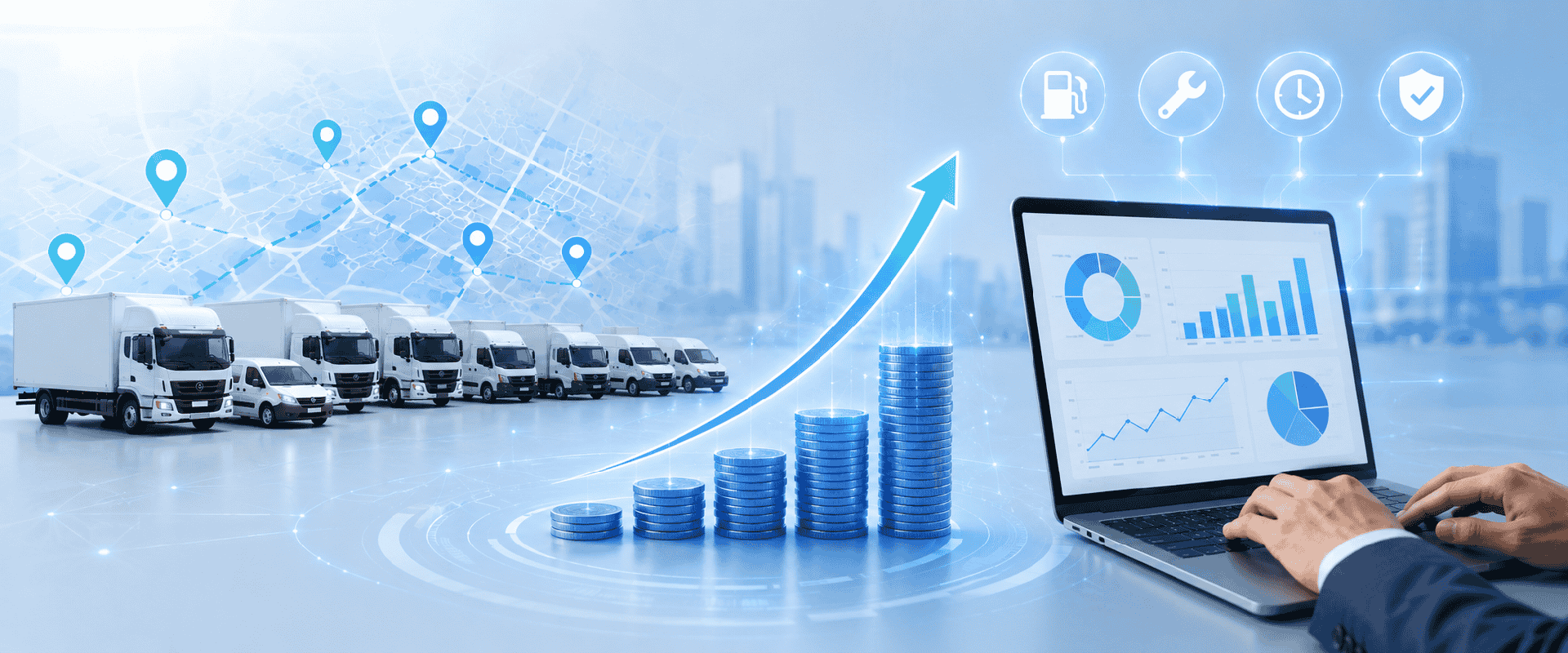
4. 10–20 vehicles: The "golden opportunity" for digital transformation?
Why not wait until reaching a 50-vehicle fleet before investing in a TMS? The answer lies in "systemic scalability."
- Building a Solid Foundation: Implementing technology while the scale is still manageable makes it significantly easier to reshape the habits of staff and drivers. By the time the enterprise expands to 50 or 100 vehicles, a standardized operational process is already firmly in place. At that stage, scaling up is simply a matter of adding more user accounts and assets.
- Data as an Asset: Early TMS adoption allows businesses to accumulate a wealth of data regarding operational costs, driver performance, and customer behavior. This historical data serves as a vital foundation for making informed, data-driven decisions when planning future fleet expansions.
5. Criteria for choosing a TMS for small transport businesses
To ensure the investment does not become a financial burden, small businesses should consider the following criteria:
- Customization and scalability: the software must be flexible to accommodate the specific characteristics of transportation in Vietnam (e.g., managing multiple surcharges, en-route expenses, and toll stations).
- Simple and user-friendly interface: drivers and dispatchers are typically not highly tech-savvy. An intuitive mobile app is a crucial factor.
- Flexible cost model: prioritize SaaS (software as a service) solutions with monthly fees or per-vehicle pricing to reduce the pressure of initial capital expenditure (CAPEX).
- Experienced implementation partner: a vendor that deeply understands local logistics operations will ensure a swift implementation process, avoiding wasted time.
Sota Solutions is proud to be a digital transformation partner for many logistics enterprises in Vietnam. With a proven reputation and professionalism, Sota Solutions does not merely provide technology but also serves as a reliable transport TMS implementation consultant, helping small businesses design the most suitable digital transformation roadmap based on their existing resources.

6. TMS implementation costs for small businesses: what to prepare?
Cost is always a primary concern for business owners. For a fleet size of 10–20 vehicles, enterprises can select a solution that balances functionality with budget:
- Initial costs: cloud-based solutions generally range from tens to hundreds of millions of VND for setup and basic customization, depending on the specific provider and the implementation scope.
- Ongoing costs: these are typically based on monthly or annual subscriptions, often calculated per vehicle or per order, which makes operational expenses easy to forecast.
- Additional expenses: it is important to budget for staff training and integration with existing systems, which typically accounts for 20–50% of the core software cost.
Return on investment (ROI): a full return is often achieved within 12–18 months through significant savings in operational waste. Many modern platforms allow businesses to start with a basic package and scale up as their fleet grows.
7. Conclusion: investing in the future
Returning to the initial question: is a TMS investment worthwhile for a fleet of just 10–20 vehicles?
The answer is a definitive YES, especially if you want to avoid falling behind in the competitive race for operational efficiency. Investing in a TMS is not a sunk cost; rather, it is a strategic investment to safeguard your profit margins and create momentum for sustainable growth. With a robust management system, your enterprise will operate more professionally, earn greater customer trust, and, most importantly, transition to data-driven management rather than relying on intuition.
If you are seeking the correct path for your digital transformation roadmap, let the experts at Sota Solutions assist you. We are committed to providing optimal TMS solutions that empower small transport firms to confidently become vital links in the modern supply chain.
Are you ready to optimize your operational costs by 20% today? Contact Sota Solutions – a reputable transport TMS implementation consultant—to receive a comprehensive, free consultation tailored specifically to your business.
We hope this article provides realistic and objective insights for transport business owners. We wish your enterprise every success in finding the right technology solution to achieve a breakthrough!