Logistics costs in Vietnam currently account for approximately 16–20% of GDP — significantly higher than the regional average for developed economies. According to reports from the World Bank and the Vietnam Logistics Association (VLA), this burden continues to exert substantial pressure on the profit margins of thousands of logistics enterprises, particularly freight forwarding and transportation companies. Many operators still rely on manual processes, fragmented data systems, and limited forecasting capabilities, resulting in excess inventory, suboptimal transportation routes, and elevated administrative expenses.
In this context, Enterprise Resource Planning (ERP) software is far more than a simple management tool — it represents a strategic solution that enables logistics businesses to comprehensively restructure their entire supply chain. International studies and real-world implementations consistently demonstrate that, when deployed correctly, ERP can deliver operational cost reductions of up to 30% through automation, real-time data integration, and resource optimization. This article provides a detailed analysis of the underlying mechanisms, specific implementation steps, and practical pathways for Vietnamese logistics enterprises to achieve these results.
Major challenges in traditional supply chain management for Vietnamese logistics enterprises
The logistics supply chain today faces numerous inherent bottlenecks. First, data remains fragmented across departments: warehousing, transportation, sales, and finance typically operate on separate systems, leading to frequent errors in information exchange. According to industry reports, transportation costs account for up to 59% of total logistics expenses, while inventory and management costs represent 40%, covering storage, loading/unloading, and packaging.
Second, inaccurate demand forecasting forces companies to maintain excessively high safety stock levels, which inflates working capital costs and increases the risk of obsolete inventory. Third, fleet and delivery route management still relies heavily on manual experience, resulting in wasted fuel, prolonged waiting times, and contract penalties due to delays. Finally, compliance with customs regulations, electronic invoicing, and financial reporting has become increasingly complex, demanding significant administrative resources.
These challenges not only drive up operational costs but also erode competitiveness, especially when customers expect fast, transparent, and cost-effective delivery. This is exactly where ERP serves as the essential bridge, enabling the transition from a reactive model to a proactive, forecast-driven, and optimized approach.

What is ERP and its pivotal role in supply chain optimization
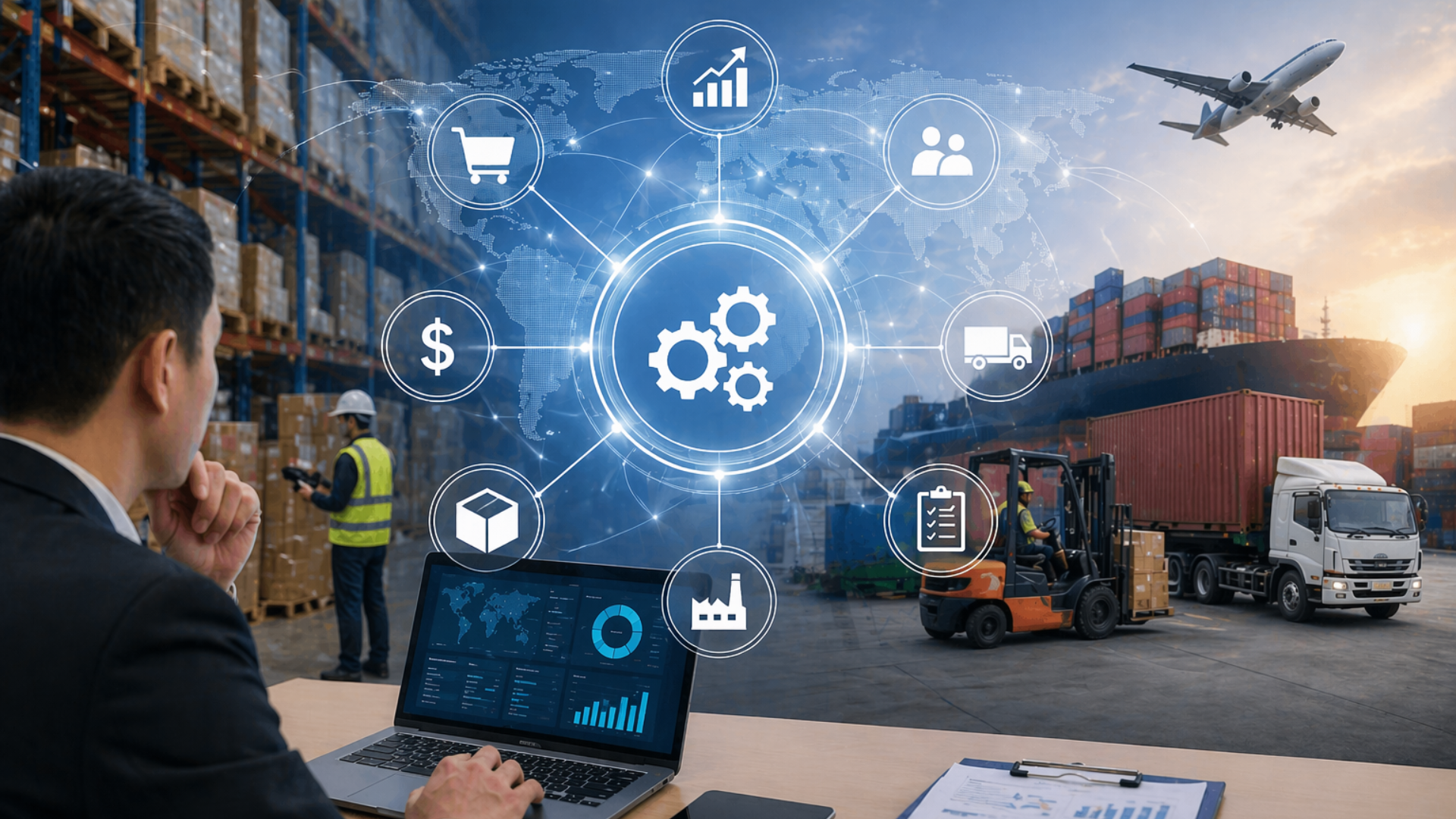
ERP stands for Enterprise Resource Planning — a system that integrates all core business processes into a single, unified platform. Unlike standalone software solutions, ERP seamlessly connects the supply chain management (SCM), warehouse management (WMS), transportation management (TMS), procurement, finance, and CRM modules on the same real-time database.
In the logistics sector, ERP plays a central role by:
- Providing end-to-end visibility: tracking shipments from booking through domestic transportation, customs clearance, and final delivery.
- Automating workflows: from order creation and route planning to invoicing and KPI reporting.
- Supporting data analysis: leveraging AI and interactive dashboards to forecast demand, optimize inventory levels, and evaluate supplier performance.
According to studies by Panorama Consulting and NetSuite, more than 90% of enterprises that implement ERP successfully report significant inventory optimization, higher labor productivity, and stronger supplier relationships — all of which directly contribute to lowering operational costs.
Specific mechanisms by which ERP reduces operational costs by up to 30%
Achieving a 30% cost reduction is not accidental — it results from the synchronized integration of multiple powerful features. Below are the key mechanisms, drawn from real-world experience of global and Vietnamese logistics enterprises:
1. Intelligent inventory management and reduced storage costs
ERP employs MRP (Material Requirements Planning) and demand forecasting based on historical data, market trends, and actual orders. The outcome is a 20–30% reduction in excess inventory, a 10–20% cut in carrying costs, and up to a 60% decrease in stockouts. Companies no longer need to overstock as a safeguard against risk; instead, they can implement the Just-in-Time (JIT) model far more effectively.
2. Logistics and transportation optimization
The TMS module within ERP calculates optimal routes in real time (factoring in traffic, weather, and vehicle load), reducing fuel costs by 15–25% and shortening delivery times. Integration with GPS and IoT enables real-time tracking, minimizing losses and delay penalties. Many enterprises report saving $8–10 in logistics costs for every $1 invested in data accuracy.
3. Automation of procurement processes and supplier management
ERP automatically generates purchase orders (PO), evaluates suppliers according to KPIs (on-time delivery, quality, and price), and centralizes contract negotiations. This delivers a 10–20% reduction in procurement costs through volume discounts and eliminates expensive emergency purchases.
4. Reduction in administrative costs and human errors
Automation of reporting, electronic invoicing, and financial reconciliation cuts manual labor time by 50–70%. Errors are dramatically reduced, helping avoid customs penalties or customer complaints — hidden costs that frequently represent 5–10% of total operations.
5. Real-Time data analysis and rapid decision-making
ERP dashboards display key performance indicators such as inventory turnover, on-time delivery rate, and cost per shipment. Businesses can adjust operations instantly, eliminate waste, and seize market opportunities.
In summary, these combined improvements typically deliver an overall operational cost reduction of 20–30% within 12–18 months after go-live, depending on company scale and the level of integration achieved.
Effective ERP implementation steps for logistics enterprises
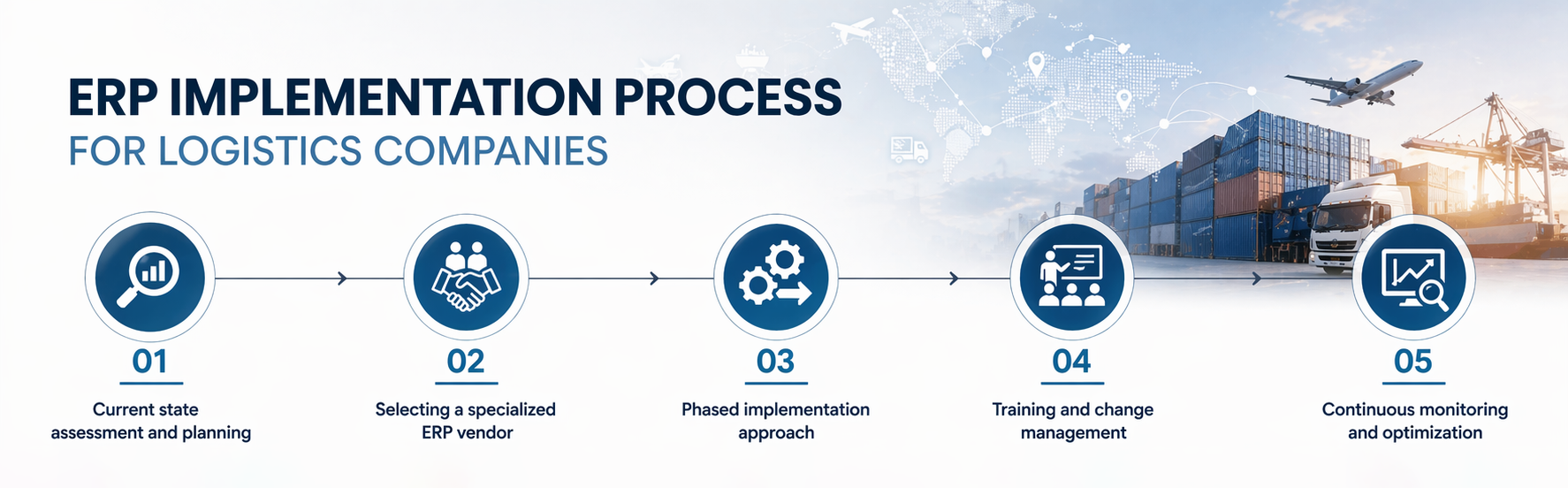
To achieve optimal results, businesses should adhere to a structured implementation roadmap:
- Current state assessment and planning: Identify core pain points and select the most relevant modules (SCM, WMS, TMS, finance).
- Selecting a specialized ERP vendor: Prioritize solutions with proven logistics expertise and the capability to customize according to Vietnamese regulations (e-invoicing, customs procedures).
- Phased implementation approach: Begin with core modules—such as warehouse and transportation—to realize a quick ROI before expanding to other functions.
- Training and change management: Ensure staff proficiency through comprehensive training, while integrating change management strategies to mitigate internal resistance.
- Continuous monitoring and optimization: Utilize KPIs to measure ROI and make data-driven adjustments based on real-time performance.
The typical implementation timeline ranges from 6 to 12 months, with a clear ROI generally visible starting from the second year.
Choosing a specialized ERP for logistics – Solutions for Vietnamese enterprises
Not every ERP is suitable for the logistics industry. Freight forwarding enterprises need systems with deep integration of booking, shipment management, pricing, and CRM. A typical example is solutions tailored for the Vietnamese market, such as Sota FMS by Sota Solutions—a specialized logistics ERP with end-to-end features ranging from order management and shipping to finance and AI automation (OCR, chatbots). These tools help optimize operational processes, reduce labor costs, and improve data accuracy while ensuring full legal compliance.
Conclusion: ERP – A strategic investment for sustainable growth
Optimizing the supply chain with ERP not only helps reduce operating costs by 30% but also provides a superior competitive advantage: faster delivery, better customer service, and the ability to scale without increasing the cost ratio. In the context of Vietnam's logistics undergoing a strong transformation through digital transformation, implementing ERP is a necessary step for businesses to not only survive but lead the market.
If your business is looking for a specialized ERP solution for logistics, consider evaluating systems that fit your specific scale and needs. Contact Sota Solutions nos for a free consultation and a live demo—the first step to turning cost challenges into a sustainable growth advantage.
The article references reputable sources from VLA, World Bank, Panorama Consulting, and real-world implementation experience.