In the era of rapid digitalization, the logistics and freight forwarding industry is at a major turning point. Pressures from fluctuating fuel costs, market demands for high-speed delivery, and the complexity of global supply chain management have forced companies to seek breakthrough solutions.
In this context, digital transformation has shifted from a pure technology initiative into a strategic framework that helps enterprises reshape their competitive advantage. Within this structure, artificial intelligence (AI) serves as the core element, responsible for processing big data streams and optimizing operational decisions in real time.
1. Current status and challenges of traditional Logistics
Many logistics companies today still operate based on human experience and fragmented management systems. This leads to a series of bottlenecks:
- Wasted operational costs: Manual route planning results in empty backhauls and unnecessary fuel consumption.
- Lack of predictability: Businesses remain reactive to shifting market demands, leading to warehouse overcrowding or underutilization.
- Data processing errors: Manual processing of documents and bills of lading is time-consuming and prone to errors, which delays customs clearance and delivery speeds.
As traditional optimization methods hit a performance ceiling, the emergence of AI unlocks an entirely new space for development, driven by its capacity for big data analytics and machine learning.
2. The core role of AI in Logistics digital transformation
AI does not replace humans, but it restructures how the supply chain operates. Below are the strategic roles of AI that are reshaping the face of the freight forwarding industry:
2.1. Smart route optimization
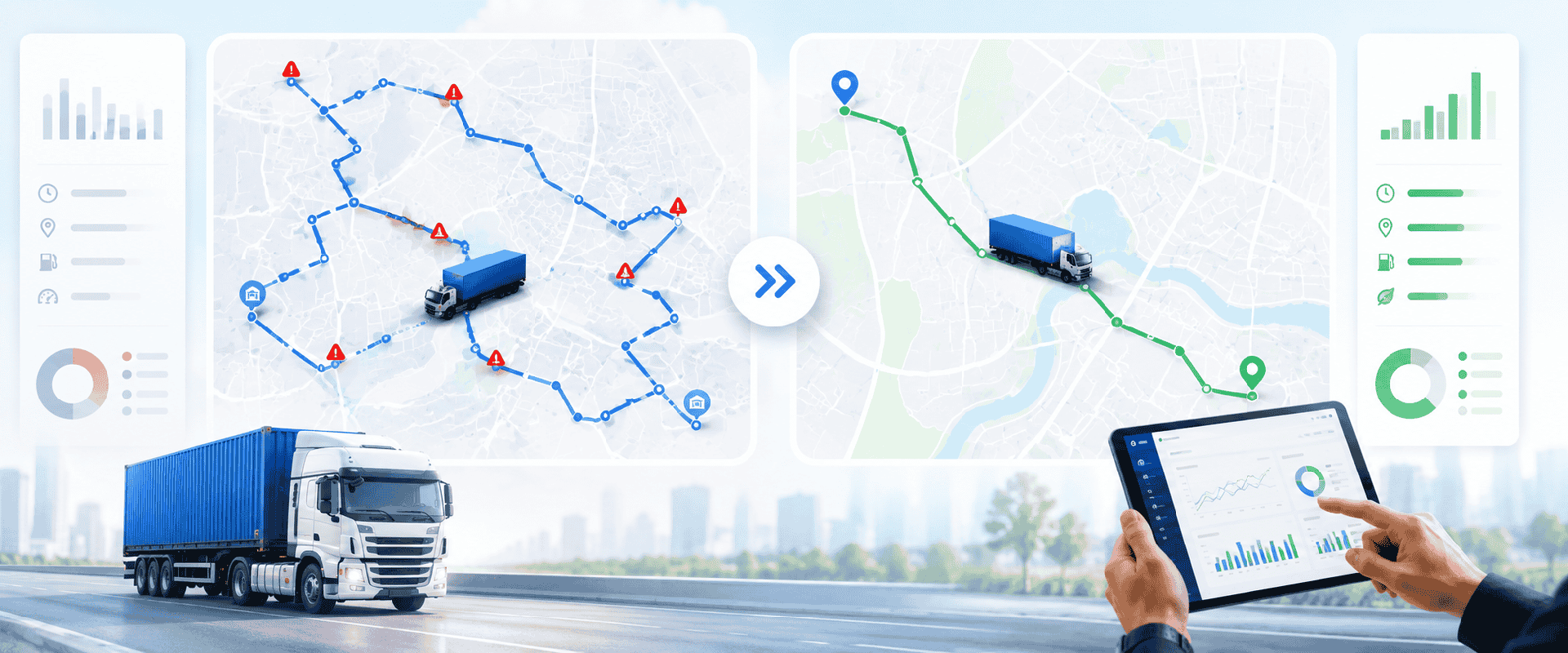
This is the most practical and immediate cost-effective application of AI. Instead of assigning fixed routes, AI algorithms analyze real-time data streams, including traffic density, weather conditions, delivery locations, and vehicle characteristics.
The result: AI automatically calculates the most optimal travel route, helping to reduce travel distance by 15% to 25%, significantly saving fuel costs and ensuring the on-time in-full (OTIF) rate.
2.2. Accurate market demand forecasting
By analyzing historical data, purchasing trends, economic fluctuations, and even seasonal events, AI can accurately forecast transportation and warehousing demands in the near future. This empowers B2B enterprises to proactively dispatch fleets, optimize warehouse space, and avoid supply chain disruptions or resource waste during off-peak seasons.
2.3. Smart warehousing management
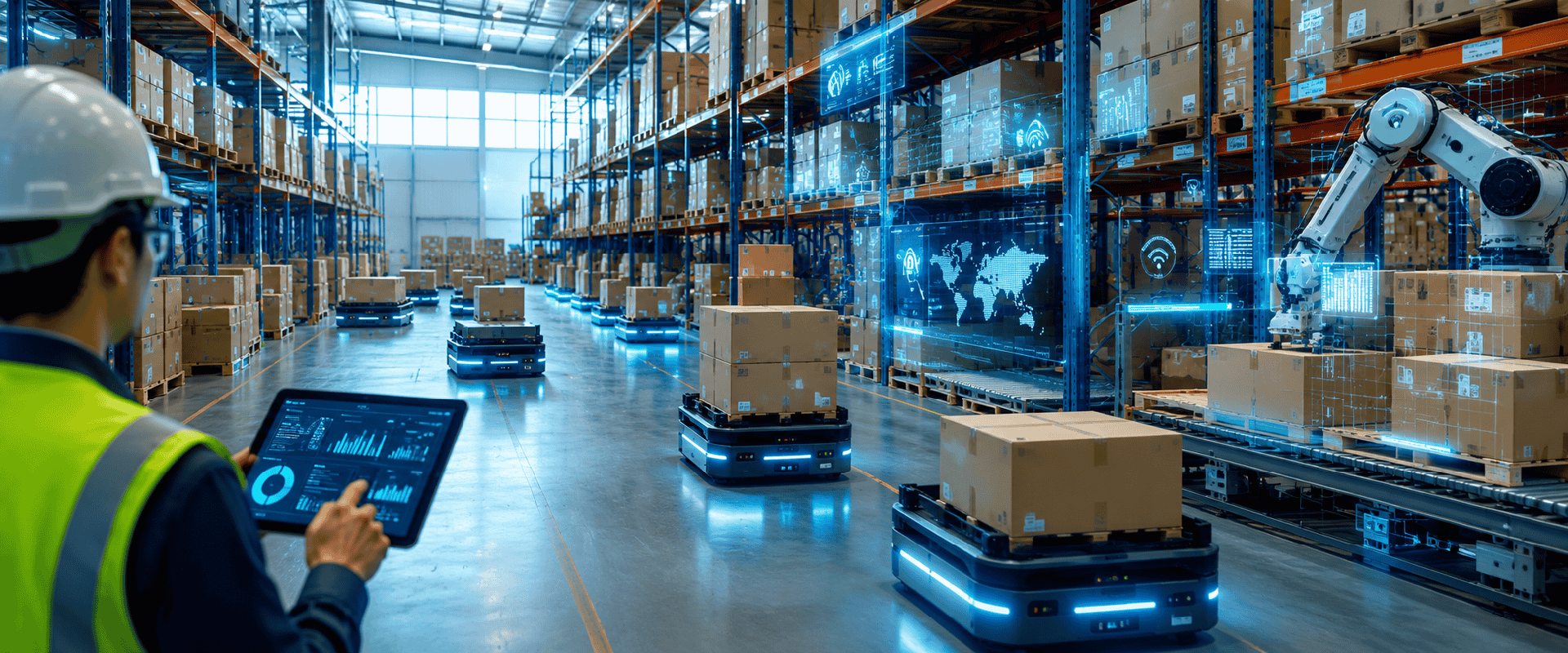
In modern warehouses, AI integrates with internet of things (IoT) systems to locate, classify, and organize goods scientifically. AI analyzes the inbound and outbound frequency of each item to suggest optimal storage positions, minimizing the travel time of staff or automated guided vehicles (AGVs). Additionally, AI provides early warnings for safety hazards or potential cargo damage in the warehouse.
2.4. Process automation with robotics & AI
Every day, a freight forwarding business handles thousands of customs documents, invoices, and delivery notes. Natural language processing (NLP) and optical character recognition (OCR) technologies integrated with AI can automatically read, extract, and enter data into management systems with up to 99% accuracy. This process frees staff from repetitive tasks, accelerating customs clearance and order processing speeds.

3. Strategic benefits of AI adoption in Logistics enterprises
Integrating AI into the digital transformation process not only addresses short-term challenges but also builds long-term competitive advantages for B2B enterprises:
Criteria | Traditional Model | AI-Powered Logistics Model |
Decision-making | Based on experience and intuition | Driven by actual data (Data-driven) |
Operational costs | High, difficult to control waste | Deeply optimized, minimizing fuel and labor waste |
Customer experience | Customers passively wait for information | Real-time order status tracking |
Flexibility | Poor adaptation to unexpected incidents | Automatically suggests immediate alternative solutions |
4. A roadmap for successful AI deployment in Logistics enterprises
Despite the immense potential of AI, successful adoption requires a strategic and measured approach. A methodical AI-driven logistics digital transformation roadmap typically consists of three steps:
- Data standardization and cleaning: AI requires clean data inputs to function effectively. Businesses must digitize all core processes to build a synchronized and unified database system.
- Selecting the right solution: Instead of investing in overly expensive AI systems that are detached from practical needs, businesses should start by integrating AI models into existing enterprise management software (such as TMS, WMS, and ERP).
- Choosing a reputable partner: A partner with a deep understanding of local logistics operations will help the enterprise shorten deployment time and optimize investment costs.
If your business is looking for such a technological launchpad, Sota Solutions is a trusted partner. As a specialist in consulting and implementing digital transformation for logistics enterprises, Sota Solutions provides comprehensive logistics enterprise management software with pre-integrated smart modules. This solution helps automate operations, optimize fleets and warehouses, and ultimately drive superior competitive advantages for enterprises in the digital economy.
5. Future AI trends in Logistics
Looking toward the near future, the role of AI in the logistics industry will advance even further with breakthrough trends:
- Green logistics: AI plays a vital role in reducing carbon emissions by thoroughly optimizing routes and vehicle payloads, meeting stringent environmental, social, and governance (ESG) sustainability standards.
- Generative AI: This technology provides powerful support in automating interactions, resolving B2B customer complaints, and analyzing complex international commercial contracts.
Conclusion
Artificial intelligence (AI) is no longer a technology of the future; it is a direct growth driver for the logistics industry today. Businesses that adopt AI early will gain a first-mover advantage, while those slow to adapt risk falling behind in this highly competitive race.
The time has come for your business to establish a comprehensive and practical logistics digital transformation strategy.
Are you ready to optimize your supply chain with technology? Contact Sota Solutions today to receive in-depth consulting materials on a comprehensive logistics management software solution tailored specifically for your business.