A disruption in even a minor link of the supply chain can impact an enterprise's entire distribution system. For logistics and transport service providers, a fleet is not merely a fixed asset, but the lifeline that determines the survival of goods movement. However, operating a large-scale fleet has never been a simple task as businesses face a multitude of variables: fluctuating fuel costs, inconsistent driver performance, unscheduled maintenance expenses, and the pressure to optimize delivery times.
To maintain stable profit margins and build a solid reputation in the logistics market, establishing a professional fleet management process is a mandatory requirement, completely replacing manual and subjective management methods.
1. Current reality and challenges in fleet management
Many transport enterprises today still operate under a fragmented model. Information regarding routes, vehicle status, maintenance schedules, and costs is often managed separately through logbooks or independent Excel files. This method reveals significant loopholes as the fleet size scales up:
- Resource Wastage and Poor Efficiency: Empty miles on return trips and suboptimal shipment allocation lead to situations where some areas are overloaded while others face vehicle shortages.
- Hidden Cost Leakage: The lack of a mechanism to control actual fuel consumption standards, combined with unexpected repair costs due to a lack of timely scheduled maintenance, drives up expenses.
- Loss of Safety Control and Legal Risks: Inability to monitor driver behavior (speeding, harsh braking, incorrect routing) leads to increased risks of accidents or administrative fines, directly impacting the enterprise's reputation with partners.
2. Professional and standardized fleet management process
A comprehensive fleet management process must cover the entire operational lifecycle of the vehicles and the staff workflow, from preparation and operation to post-trip processing and reporting.
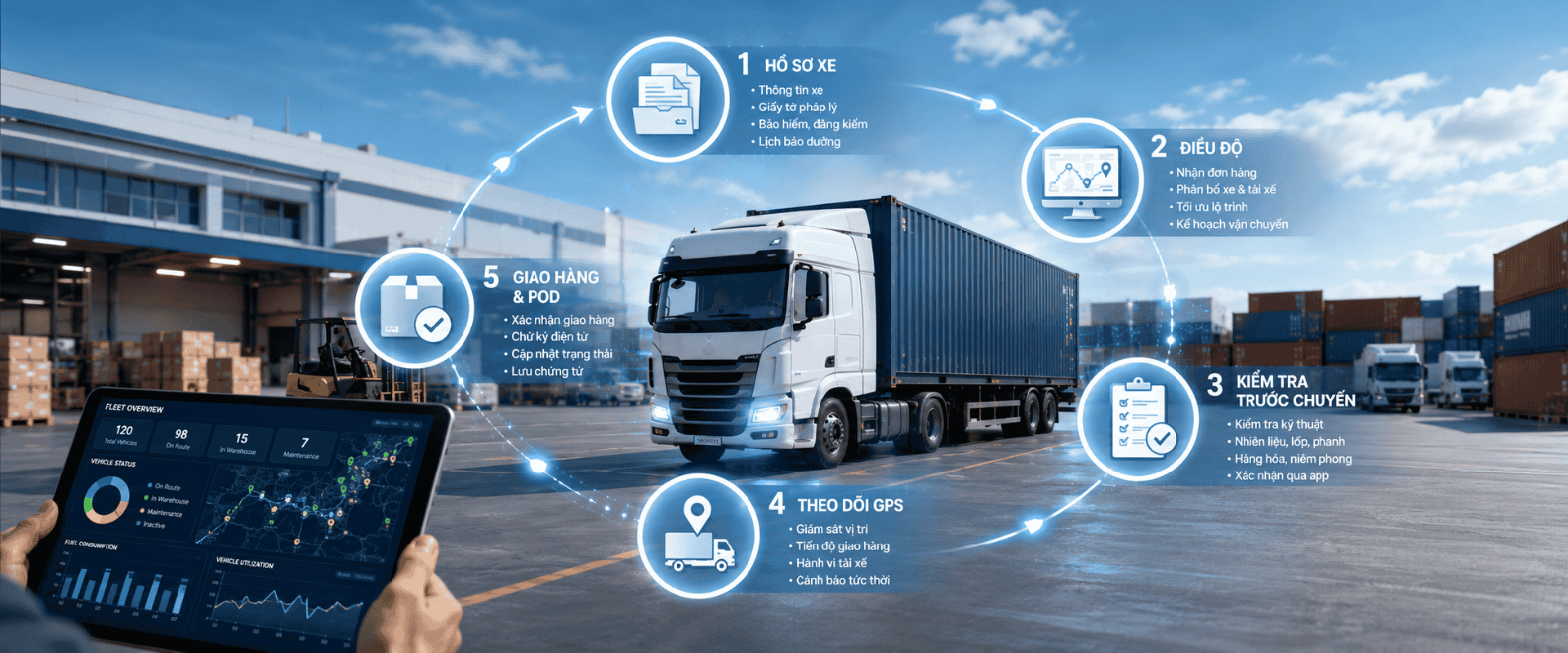
Step 1: Technical profile management and vehicle classification
Every vehicle in the fleet needs to have its information digitized for centralized management.
- Basic Information: License plate, vehicle type (truck, tractor head, reefer truck), payload capacity, and cargo volume.
- Legal Documentation: Inspection validity, third-party liability insurance, physical damage insurance, transport badges, and compliant GPS tracking devices.
- Legal Documentation: Inspection validity, third-party liability insurance, physical damage insurance, transport badges, and compliant GPS tracking devices.
Step 2: Dispatch planning and route optimization (Routing & Scheduling)
This phase directly determines the variable costs of each shipment. A professional process requires dispatchers to balance multiple factors simultaneously:
- Order consolidation and drop-off optimization: Combine orders on the same route or in nearby areas to maximize capacity utilization.
- Optimal route calculation: Select the shortest routes, avoiding truck-restricted hours and unnecessary toll stations to save time and fuel.
- Appropriate vehicle and driver assignment: Match drivers based on capability (route experience) and vehicle technical specifications suited to the cargo type (e.g., refrigerated goods require vehicles with standard cooling units).
Step 3: Pre-trip Inspection
The standardized process requires drivers to perform a quick technical check and confirm via an electronic report before departure:
- Check core safety systems: Brakes, tires, lighting systems, and windshield wipers.
- Check fuel levels, engine oil, and coolant.
- Confirm seal status, cargo quantity, and dashcam systems (if available).
Step 4: Real-time fleet monitoring
Throughout the journey, the operations management department must closely monitor indicators via the GPS tracking system:
- Location and progress: Determine exactly where the vehicle is, whether it is adhering to the committed route, and the estimated time of arrival (ETA) to promptly notify B2B customers.
- Driver behavior: Instantly detect fuel fraud, unauthorized stops, or speeding to send direct reminders.
Step 5: Cargo delivery, handover, and post-trip processing
- Proof of Delivery (POD): Update delivery notes signed by the partner into the system immediately upon completion.
- Document Recovery and Settlement: Drivers hand over documents, fuel invoices, and toll receipts for accounting to reconcile and calculate actual costs against theoretical quotas.
3. Maintenance and cost management: The key to maintaining fleet lifecycle
A professional fleet management process cannot lack the components of in-depth technical management and financial control.
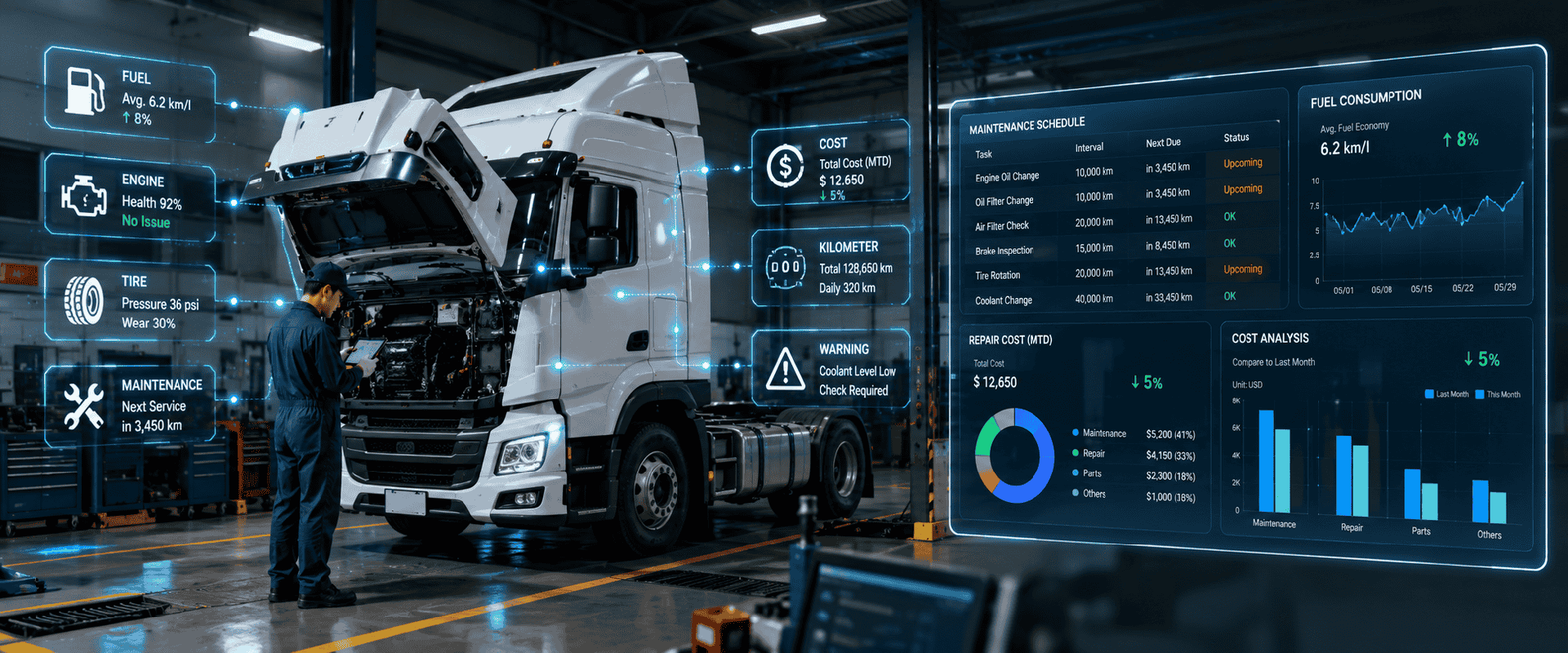
Preventative maintenance process
Enterprises should not wait for a breakdown to perform repairs. It is essential to establish automated maintenance schedules based on two criteria: operational time (monthly/quarterly) or actual mileage traveled.
- Scheduled Maintenance: Oil changes, air filter replacements, and brake system inspections at milestones like 5,000 km, 10,000 km, etc.
- Tire Management: Monitor wear and tear, tire pressure, and rotation frequency to optimize costs (tire expenses account for a relatively large proportion of the transport cost structure).
Total cost of ownership (TCO) control
On a monthly basis, managers need to break down and analyze the cost structure of each individual vehicle, including:
- Fixed costs: Vehicle depreciation, driver base salary, insurance fees, and road maintenance fees.
- Variable costs: Fuel costs, repair expenses, toll fees (ETC), and incidental en-route expenses.
- The Cost per Kilometer and Revenue per Kilometer metrics serve as the most accurate measures of each vehicle's operational efficiency.
4. Process digitization - The inevitable trend of modern logistics
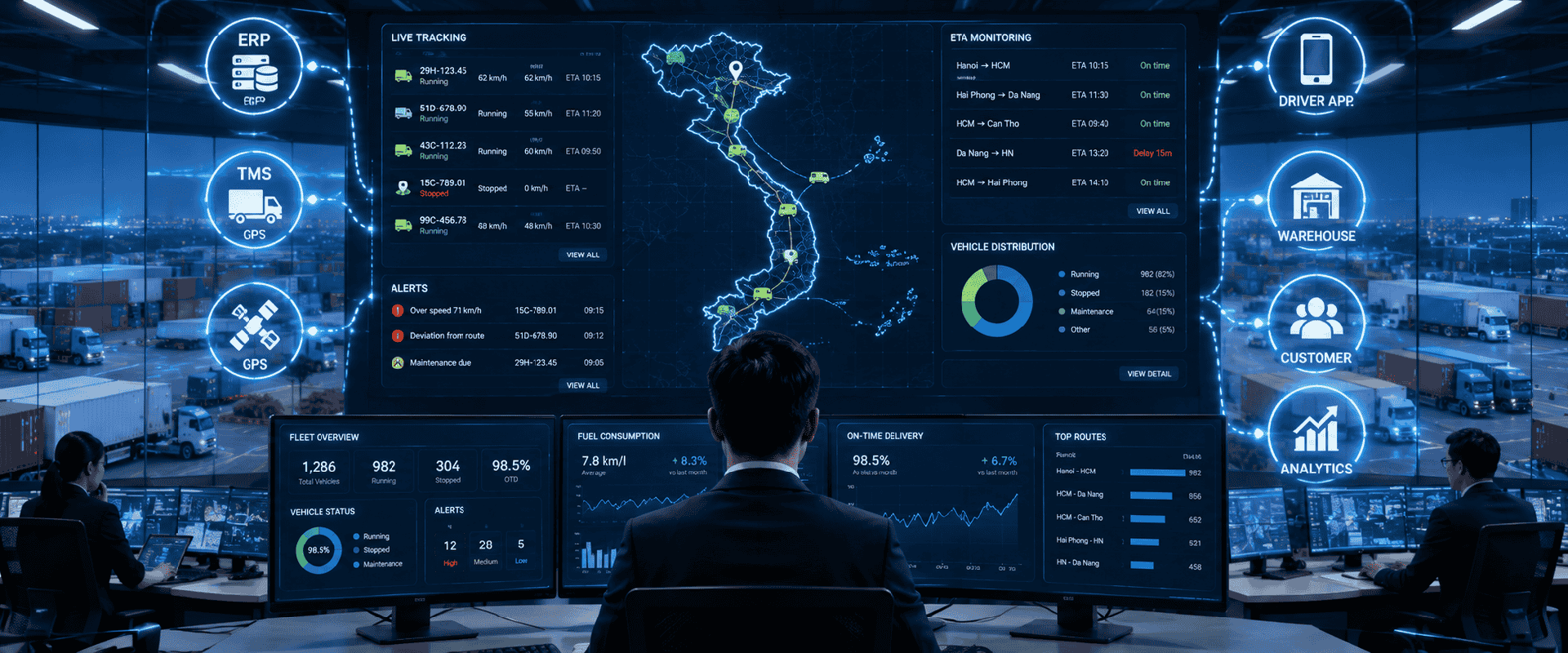
Operating a standardized fleet management process using manual tools is impossible once the fleet size exceeds 10 vehicles. Information overlap and reporting delays slow down management decision-making. Digitally transforming fleet management through technology is the only solution to optimize performance.
To implement this process synchronously, enterprises can reference the services of Sota Solutions – an effective digital transformation consulting and implementation provider for logistics and transport businesses. With the comprehensive Sota TMS transport management software solution, enterprises can easily manage a professional fleet efficiently, automate dispatch planning, and optimize fleet performance based on real-time data.
5. Core KPI indicators to evaluate fleet management efficiency
To determine whether an enterprise's fleet management process is truly professional and effective, the board of directors needs to closely monitor the following KPIs:
No. | KPI Indicator | Management Significance | Target |
1 | Fleet Utilization Rate | Measures actual vehicle operating time against total available time. | > 85% |
2 | Empty Miles Percentage | The ratio of distance traveled without cargo. | Minimize to (< 15%) |
3 | On-Time Delivery (OTD) | Measures service quality and brand reputation for B2B customers. | > 98% |
4 | Fuel Consumption Variance | The deviation between actual fuel consumption and technical quotas. | Control within +/- 2% |
5 | Downtime per Vehicle | Total time a vehicle remains idle due to technical issues or repairs. | As low as possible |
Conclusion
Building a professional transport fleet management process is not merely about controlling drivers or cutting fuel costs; it is a strategic approach to enhancing service capacity and optimizing the core resources of a logistics enterprise. Standardizing processes combined with the application of specialized technology solutions serves as the launchpad helping transport businesses break through, assert their positioning, and grow sustainably in the global supply chain.