In the digital transformation era of 2026, the "Buy vs. Build" dilemma is no longer a new topic, but the landscape has shifted fundamentally. With the explosion of Generative AI significantly reducing coding costs and SaaS (Software as a Service) providers consistently hiking subscription fees, business leaders (CEOs/CTOs) are facing a financial and strategic puzzle more complex than ever.
This article dives deep into the differences, pros, and cons, and—most importantly—provides a detailed 5-year cost roadmap to help your business make the most informed investment decision.
1. SaaS vs. Custom build: The 2026 landscape
SaaS (Software as a Service)
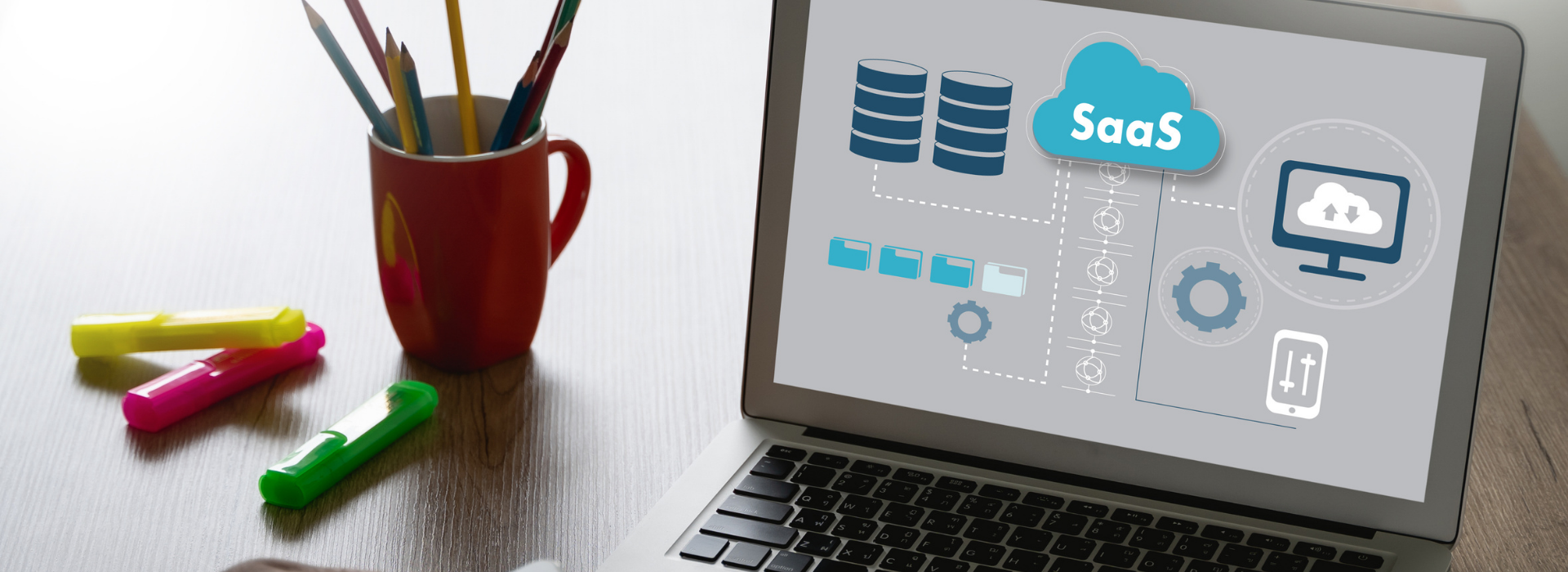
SaaS is a software distribution model where a third-party provider hosts applications and makes them available to customers over the internet. Businesses pay a subscription fee (monthly or annually).
- Examples: Sota ERP, Sota FMS, Sota CRMlog, Salesforce, Microsoft 365, HubSpot.
- The 2026 status: Most SaaS platforms have now deeply integrated AI, offering superior automation. However, these often come with expensive "AI add-on" tiers that can inflate monthly bills unexpectedly.
Custom build (In-house or Outsource)

This involves developing a proprietary software system from scratch, either by an internal team or a specialized outsourcing partner, to fit unique business logic perfectly.
- The 2026 status: Thanks to next-gen AI-assisted coding tools (such as advanced GitHub Copilot or specialized LLMs), development time and coding costs have plummeted by 20% to 45% compared to the 2020-2023 period (Source: gAIm Solutions).
2. Strategic pros and cons: A side-by-side comparison
Before looking at the numbers, we must understand the "value" behind each choice.
| Criteria | Buying SaaS | Custom Building |
| Speed to Market | Ultra-fast (days to weeks). | Slow (6 to 18 months). |
| Initial Cost | Low (primarily setup fees). | Very High (salaries, infrastructure). |
| Customization | Limited to existing templates. | Absolute; tailored to specific needs. |
| Maintenance | Handled by the provider. | Company must maintain/upgrade. |
| Data Ownership | Dependent on the provider. | Full control and ownership. |
| Competitive Edge | Using the same tools as rivals. | Unique, proprietary tools. |
3. Detailed 5-year total cost of ownership (TCO) analysis
To provide an objective view, let's look at a case study for a Medium-Sized Enterprise with 100 users requiring a core management system (like a specialized ERP or CRM).
3.1. The "Hidden Costs" Often Overlooked
Many businesses fail by only looking at the sticker price. According to Gartner (2025), the actual cost of SaaS is often 150% to 200% higher than the initial license fee due to integration, training, and customization.
For SaaS:
- Subscription fees: Usually increase by an average of 5-10% annually.
- Integration fees: Connecting new SaaS with legacy systems.
- Training: Employees must adapt to a pre-defined UI/workflow.
- Overage charges: Costs for exceeding data storage or API call limits.
For Custom Build:
- IT talent: Salaries for Developers, PMs, QAs, and UI/UX designers.
- Infrastructure: Cloud hosting costs (AWS, Azure, Google Cloud).
- Opportunity cost: The time lost waiting for the system to be "ready."
- Maintenance: Typically accounts for 15-20% of the initial development cost annually.
3.2. 5-Year cost projection (estimated in 2026 rates)
Unit: Millions of VND (VNDm)
| Year | SaaS Cost Items (Rental) | Custom Build Cost Items (Ownership) |
| Year 1 | 1,200 (100 users + 200m setup) | 4,500 (Core Dev, 5-person team) |
| Year 2 | 1,100 (Year 2 fees + light integration) | 900 (Ops, Cloud, 20% Maintenance) |
| Year 3 | 1,210 (10% market price increase) | 900 (Ops, Bug fixes, Cloud) |
| Year 4 | 1,330 (Fee increase + AI modules) | 1,200 (Major v2.0 Upgrade) |
| Year 5 | 1,460 (Continued fee inflation) | 900 (Stable Operations) |
| TOTAL | 6,300 million VND | 8,400 million VND |
Cost curve observation:
- SaaS follows a steady upward linear path. It optimizes short-term cash flow (OPEX).
- Build follows a "Hook" or "J-curve": Extremely high in Year 1 (CAPEX) but drops significantly and stabilizes. The Break-even point typically occurs around Year 6 or 7, depending on the scale.
4. Strategic deep dive: why and when to choose?
4.1. When should you BUY SaaS?
SaaS is the intelligent choice if your business fits these scenarios:
- Need for speed: You need an accounting or CRM tool to go live tomorrow.
- Standardized processes: HR and payroll processes usually follow strict state or international standards. There is no need to "reinvent the wheel."
- Tight upfront budget: You prefer small monthly payments over a multi-billion VND initial investment.
- No In-house tech team: Managing an IT department is a heavy administrative burden if it’s not your core competency.
4.2. When should you BUILD custom?
The "SaaS-Rejection" trend (moving from SaaS to custom) is rising in 2026 due to:
- Highly unique workflows: If your operational logic is what makes you better than the competition (e.g., a proprietary delivery algorithm), no SaaS will fit 100%.
- Intellectual property (IP): Proprietary software is a company asset. It increases business valuation during fundraising or M&A.
- Long-term cost optimization (Massive scale): At 100 users, SaaS is cheaper. At 10,000 users, annual license fees become a "financial nightmare." Building custom can save millions of dollars over time at this scale.
- Data sovereignty & security: For sensitive sectors like Banking or Insurance, keeping data on a third-party cloud is a legal and security risk.
5. Critical risks to watch out for

- The SaaS trap: "Cost Creep" and "Lock-in" Many firms find their subscription costs doubling after 3 years. However, they can't leave because their data is buried too deep in the provider's ecosystem. Exporting data and retraining staff can cost more than the rent itself. This is Vendor Lock-in.
- The Build trap: "The Budget Black Hole" Internal projects often suffer from "Scope Creep" and late delivery. A 6-month project can turn into 18 months, tripling labor costs. Furthermore, if key personnel (Tech Leads) leave, the system can become "technical debt" that no one knows how to maintain.
6. The 2026 strategic recommendation: The hybrid model
Instead of choosing "black or white," the most successful enterprises are adopting a Hybrid Strategy:
- Use SaaS for Generic Operations: Accounting, Email, Task Management (Slack, Jira).
- Build for Core Competencies: Manufacturing Execution Systems (MES), unique Customer Experience platforms.
This allows businesses to leverage modern tech speed while maintaining control over their most vital competitive advantages and data.
7. Conclusion
There is no "one-size-fits-all" answer to Buy vs. Build.
- If you are a startup or SME needing flexibility: Buy SaaS. Focus your energy on sales and market growth rather than getting bogged down in code.
- If you are a large enterprise with high growth and unique processes: Consider Building. The support of AI in 2026 has lowered the development barrier significantly.
Final advice: Conduct a TCO calculation for your specific business over a 5-year horizon, including projected headcount growth and license fee inflation. The numbers won't lie—they will light the path to your best investment.
References:
- Gartner Report (2025)
- gAIm Solutions (2026)
- AEGONA (2026)