In the era of supply chain digitalization, upgrading or transitioning to a new logistics management software system (such as ERP, CRM, TMS) is a strategic move for enterprises to optimize operations and enhance competitiveness. However, according to corporate management surveys, over 70% of digital transformation projects fail or fall short of initial expectations not due to technical flaws, but because of human adaptation barriers.
A reluctance to change, complex new processes, or unmethodical training leads to inefficient utilization by personnel, causing disruptions in the operational chain. This article provides a strategic framework to help B2B business owners build a personnel training roadmap for rapid adaptation to new logistics management software.
1. Major challenges in implementing new logistics software
The logistics industry features continuous operations, high document volumes (House B/L, Master B/L, customs declarations...), and the participation of multiple departments from operations and warehousing to accounting. Consequently, adopting new technology often encounters several hurdles:
- Psychological barriers and fear of errors: Logistics personnel operate under intense time and accuracy pressures. A single minor data entry error can lead to demurrage penalties, storage fees, or incorrect revenue-cost allocations.
- Technology capability gaps: Not all employees possess the same technological proficiency. Shifting from manual operations (Excel, paperwork) to automated processes (AI OCR, predictive analytics) easily triggers information overload.
- Unrealistic training programs: Many enterprises rely purely on theoretical training, lacking practical scenario-based workflows tailored to specific job positions.

2. 5-Step workforce training process for rapid system adaptation
To optimize the onboarding timeline and smoothly transition software into live operations, logistics enterprises should implement the standardized training roadmap below:
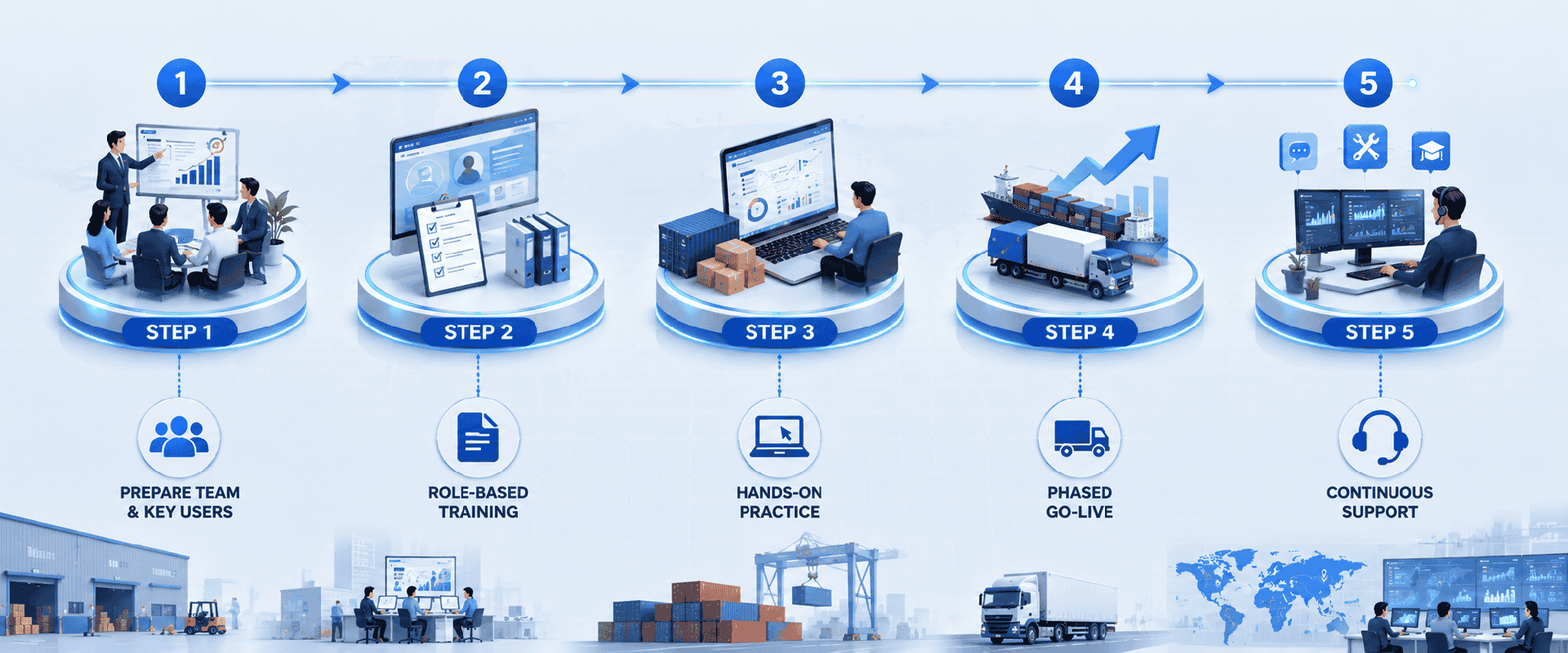
Step 1: Align perspectives and establish a core team (Key users)
Before software installation, leadership must communicate transparently about project goals. Personnel need to understand clearly which "pain points" the new software addresses (e.g., reducing documentation time, automating debt reconciliation) rather than viewing it as a surveillance tool.
Concurrently, select at least one employee with strong professional competence and tech-savviness from each department (Documentation, Dispatch, Accounting, Sales) to act as a Key User. This team will be the first to learn the system, collaborating closely with the implementation partner for testing and directly supporting other personnel (End Users) during future operations.
Step 2: Standardize training materials by job position
Avoid using a single, hundreds-of-pages-long user manual to train everyone indiscriminately. Materials should be broken down into concise standard operating procedures (SOPs) focused on the specific tasks of each department:
- Documentation department: Focus on document creation workflows, HBL/MBL management, and customs declarations.
- Accounting department: Focus on revenue management, logistics cost allocation, invoice management, and debt reconciliation in accordance with current circulars and accounting standards.
- Management level: Focus on leveraging management reporting systems, performance analysis dashboards, and process approvals.
Step 3: Apply hands-on training methods
Learning by doing is the only way to shorten adaptation time. Enterprises must require the software provider to set up a simulation environment (Sandbox/Testing environment) populated with realistic sample data.
- Allow personnel to practice data entry and handle common error scenarios without fear of affecting live business data.
- Organize post-training competency assessments to ensure personnel meet requirements before the system officially goes live.
Step 4: Divide the Implementation roadmap into phases
Large-scale enterprises should avoid deploying all complex modules simultaneously. Begin with core modules that directly handle daily operations (such as order management and freight forwarding operations) before expanding into advanced features like AI automation, route optimization, or predictive analytics.
Optimal Solution for Businesses: For this transition to proceed safely, partnering with a capable consulting firm is crucial. With professional expertise and a methodical implementation roadmap, Sota Solutions is a reputable partner specializing in consulting and deploying logistics enterprise management software. We commit to accompanying businesses in training personnel to adapt rapidly, master technology, and maximize system capabilities.
Step 5: Post-go-live monitoring and continuous improvement
During the first 1 to 3 months following the official launch, enterprises need to maintain an internal technical support channel (Helpdesk) to resolve employee issues instantly. Gather feedback regularly to adjust software configurations or operational procedures for optimal real-world performance.
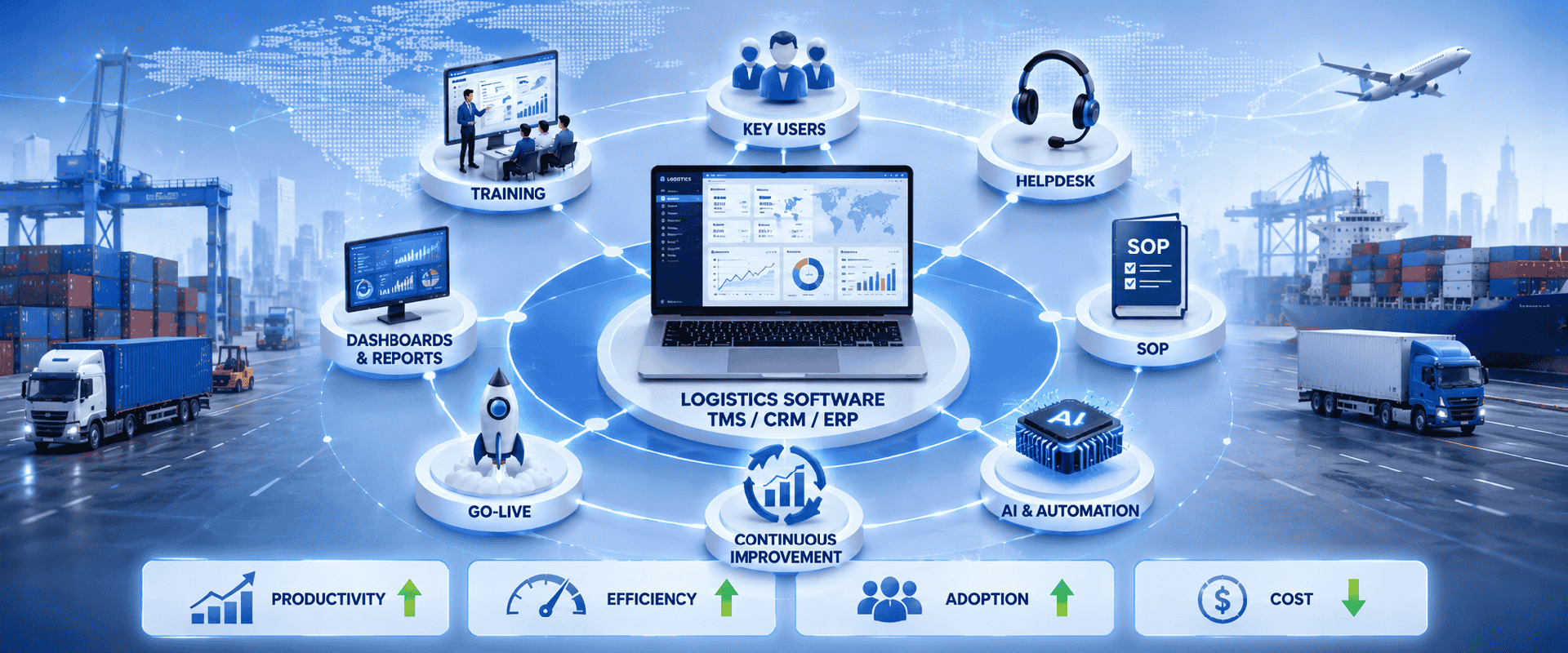
3. Criteria for selecting an implementation partner with strong training capabilities
The competence of the software provider/implementation partner accounts for 50% of the success in personnel training. A high-quality technology partner for a B2B logistics enterprise must meet the following criteria:
Criteria | Detailed requirements |
Deep industry expertise | The implementation partner must deeply understand specialized logistics knowledge (container management, logistics costs, import-export processes) to speak the same language as the enterprise's personnel. |
Clear roadmap | A detailed training plan must be provided, spanning from the preparation and testing phases to post-Go-live support. |
Commitment to Knowledge Transfer | The partner must not only install the software but also fully transfer all operational guide documents, ensuring the enterprise can run independently after the project concludes. |
4. Conclusion
Digital transformation in the logistics industry is a long-term journey where software serves as the tool, but people determine its effectiveness. Investing seriously in a strategic personnel training program for rapid adaptation not only protects an enterprise's technology investment capital but also creates a solid launching pad to optimize costs and achieve breakthroughs in operational efficiency within the modern supply chain.