Revenue growth and market expansion inevitably place direct pressure on delivery and fulfillment operations. When order volumes triple and delivery destinations span multiple geographic regions, manual workflows relying on spreadsheets, instant messaging, and the personal experience of dispatchers quickly become critical bottlenecks.
To ensure transport scaling aligns with profit margins rather than accumulating hidden costs, business leaders require a structured, standardized, and highly automated operational framework.
1. Common challenges when scaling transportation operations
Rapid growth without process standardization typically exposes businesses to three core challenges:
- High empty miles and poor load factor: As fleet size and trip volume increase, manual dispatching fails to solve complex round-trip consolidation, resulting in deadhead miles (one-way empty runs) and sub-optimal capacity utilization.
- Loss of control over hidden costs and consumption rates: Tolls, fuel consumption, incidental drop-off fees, and vehicle detention/demurrage charges will erode gross margins on every shipment if not tracked in real time.
- Documentation lag and delayed debt reconciliation: Slow collection of proof of delivery (POD) delays billing cycles, increasing cash-flow friction and the risk of payment disputes with clients and subcontractors.
2. Four core pillars for standardizing transportation management
To effectively control an expanding distribution network, enterprises must establish four foundational operational pillars:
2.1. Route optimization and order consolidation automation
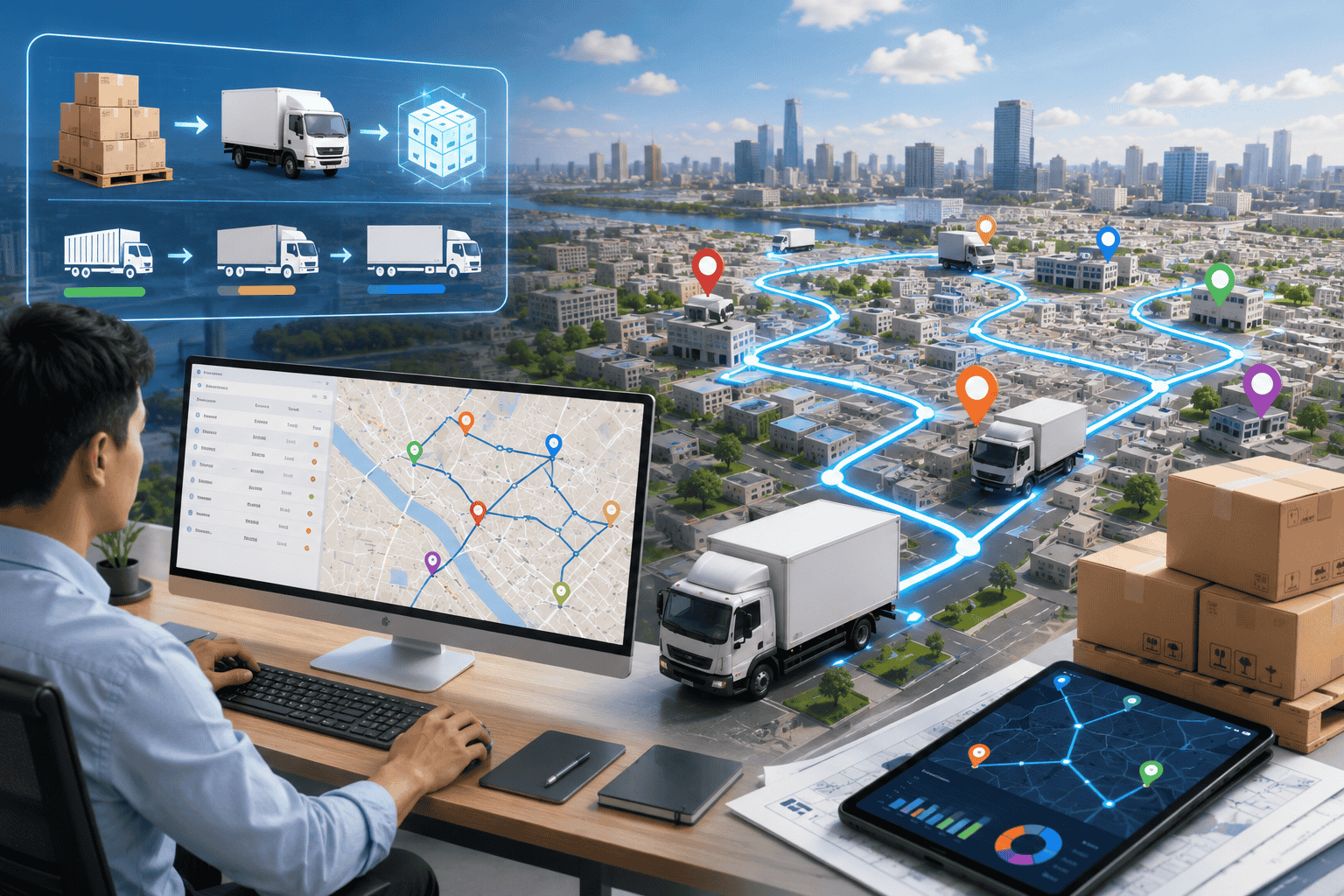
Manual dispatching is only viable under 10–15 vehicles per day. Beyond this threshold, dispatchers cannot simultaneously calculate multiple constraints: traffic/weight restrictions, volumetric and weight capacity, delivery time windows, and cost per kilometer.
- Smart order consolidation: Group orders along the same route or geographic cluster to assign the optimal vehicle capacity.
- Multi-stop routing: Leverage route optimization algorithms to minimize total distance traveled and shorten vehicle turnaround time.
2.2. Hybrid fleet management: balancing in-house fleet and 3PL subcontractors
During expansion, funding a 100% proprietary fleet creates excessive CapEx burdens, especially during low seasons. The optimal operational model combines a core in-house fleet with a satellite network of third-party transport partners.
- Establish master service agreements with strict SLA metrics: pick-up lead time, on-time delivery (OTD) rate, and loss/damage thresholds.
- Standardize rate cards and implement automated load tendering based on carrier performance and contracted rates.
2.3. Digital document management and electronic proof of delivery (ePOD)
Delivery documents are prerequisites for triggering cash flow and customer invoicing. Scaling transport operations requires eliminating dependence on physical paper receipts.
- Deploy mobile driver applications to capture proof-of-delivery photos and digital signatures immediately upon drop-off.
- Synchronize shipment statuses to the central dashboard in real time, allowing accounting teams to reconcile and issue invoices on the same day.

2.4. Establishing quantitative transportation KPIs
You cannot optimize what you do not measure. A professional transportation framework must be monitored against key operational metrics:
Metric category | Specific metric | Target benchmark |
Service quality | On-time delivery (OTD) | Maintain > 95% |
Fleet efficiency | Volumetric & weight load factor | Target 85% – 90% |
Operating costs | Transport cost per unit/ton/km | Minimize unbudgeted incidental costs |
Finance & cash flow | POD reconciliation cycle time | Under 24 hours post-delivery |
3. Technology adoption: A prerequisite for sustainable scaling
Digital transformation in transportation is not merely digitizing paperwork; it means restructuring operational workflows onto a centralized data platform. Operating on specialized logistics software allows businesses to scale order throughput multifold without a linear increase in operational headcount.
Depending on supply chain models, businesses should select software solutions tailored to their specific operational profile:
- For domestic transport and last-mile distribution: Fleet owners and direct distributors need a dedicated transportation management system such as Sota TMS to automate routing, tariff calculations, fleet maintenance, and real-time driver tracking.
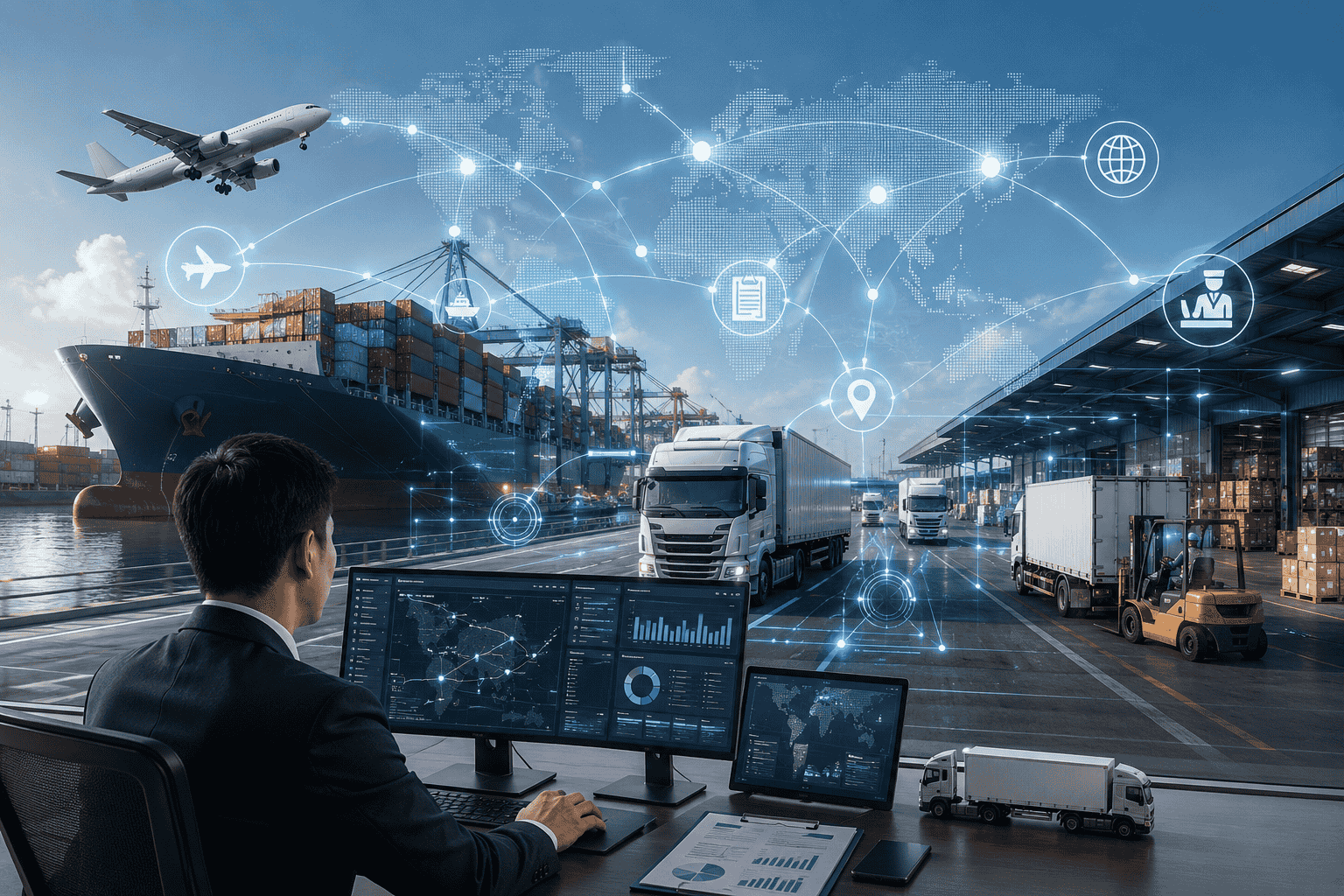
- For international freight forwarders and multimodal logistics: As operations expand across ocean, air, and intermodal lanes, freight management systems like Sota FMS centralize booking management, bill of lading issuance (House B/L, Master B/L), shipment profitability tracking, and customs compliance.
Integrating the right technology into each logistics link provides leadership with complete visibility over costs and efficiency, enabling data-driven business decisions rather than intuition.
4. A 3-Step roadmap to restructure transportation operations
To transition from fragmented workflows to a centralized transport management model, enterprises should follow a phased roadmap:
Step 1: Conduct a comprehensive operational and cost audit
- Review all current distribution routes and schedules to determine the true deadhead (empty mile) rate.
- Establish baseline benchmarks for fuel consumption, incidental surcharges, and turnaround times for each vehicle category and route.
Step 2: Standardize standard operating procedures (SOPs) and implement software
- Define cross-functional standard operating procedures: Sales ➔ Planning & dispatch ➔ Drivers/carriers ➔ Accounting.
- Deploy a transportation management platform to automate information handoffs and minimize manual spreadsheet inputs.
Step 3: Leverage operational analytics for continuous optimization
- Utilize system reports to identify bottlenecks: chronically delayed routes, carriers with high incident rates, and vehicle groups exceeding maintenance budgets.
- Continuously refine order consolidation rules and preventive maintenance schedules to maintain fleet readiness.
Scaling transportation management is not defined by how many vehicles you own or how many warehouses you lease, but by your ability to control data flows and orchestrate shipments at optimal cost. Enterprises that proactively standardize processes, establish quantitative benchmarks, and implement dedicated logistics technology will secure a sustainable competitive edge in delivery speed, service reliability, and operating margins.