In the structure of Vietnam's supply chain and logistics, road transport serves as a vital method, accounting for the highest proportion of total domestic cargo volume. However, under pressure from macroeconomic volatility and increasingly stringent service level agreement (SLA) requirements from shippers, traditional road transport management models are revealing systemic limitations.
To maintain sustainable growth, logistics enterprises must simultaneously address two key challenges: strictly controlling fluctuating operational costs and maximizing asset utilization (fleet and drivers).
The following article analyzes core challenges from a management perspective and proposes comprehensive technology solutions to optimize the transport flow for businesses.
1. Current challenges in road freight management
Entering a phase of competition driven by performance and data, manual or semi-automated management methods are creating significant barriers to a company's ability to optimize profitability.
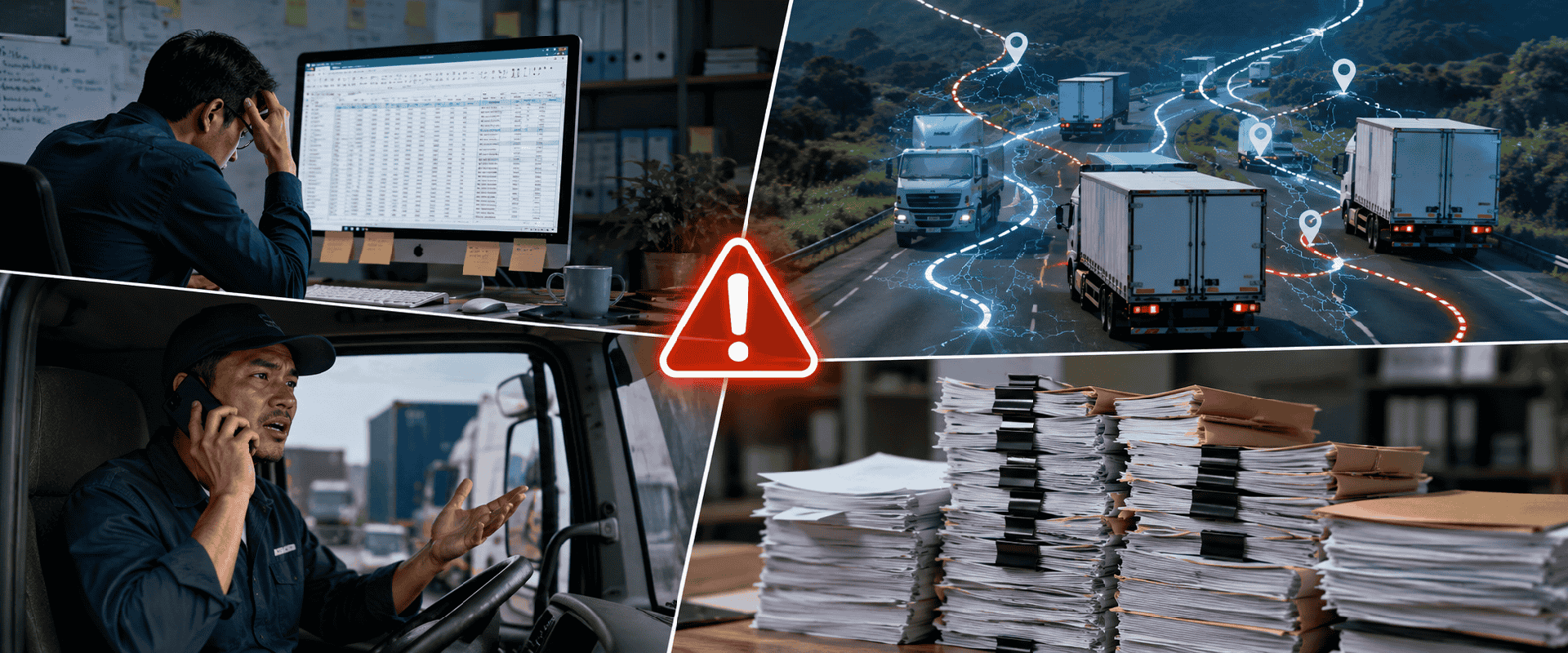
Fluctuating operating costs and lack of quantitative control tools
Fuel costs fluctuate continuously and typically account for 35% - 40% of total variable costs. In addition, cost components such as toll fees (BOT), incidental repair costs, and especially the empty tripmiles ratio have not been optimized. The lack of an automated cost tracking and allocation system makes it difficult for enterprises to accurately determine the cost-per-order and net profit margin.
Suboptimal fleet dispatching efficiency
Many enterprises currently maintain delivery planning, trip scheduling, and driver assignment processes based on the personal experience of dispatchers. This approach leads to several managerial consequences:
- Low capacity utilization and uneven vehicle distribution.
- Overlapping routes, increasing unnecessary operational mileage.
- A lack of flexibility when dealing with sudden changes from shippers or unexpected incidents on the route.
Information fragmentation and limited real-time visibility
The disconnect in information between the office dispatch team and drivers on the road is a common challenge. The inability to continuously update the actual vehicle location, delivery progress, and estimated time of arrival (ETA) keeps businesses in a reactive state. This not only impacts incident handling capabilities but also directly lowers the customer satisfaction score (CSAT) in B2B service level agreements.
Prolonged document processing and financial reconciliation
A distinctive characteristic of the road transport industry is the massive volume of control documents (dispatch orders, delivery notes, invoices, warehouse release slips). The manual collection and reconciliation of proof of delivery (POD) documents from drivers to the accounting department often suffers from a major lag (ranging from 5 to 15 days). This delay extends the cash conversion cycle and increases the risk of errors in accounts receivable management.
2. Technological solutions for comprehensive transport system optimization
To establish a long-term competitive advantage, logistics enterprises need to shift from the mindset of using standalone software to building an integrated and automated transportation management system.
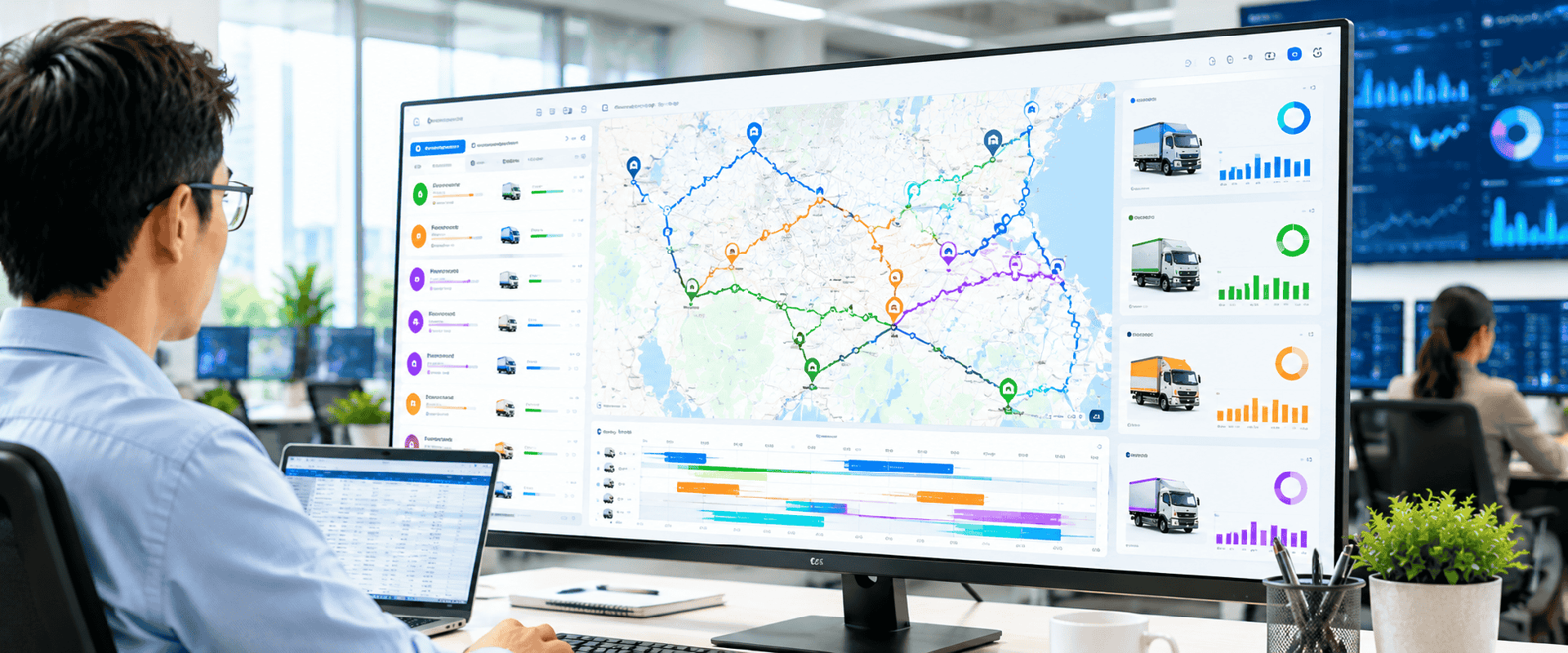
Automating dispatch planning with route optimization algorithms
Instead of relying on human factors, businesses need to configure smart algorithms into their dispatch processes. The system automatically analyzes a wide range of variables: delivery coordinates, vehicle capacity and volume, traffic restriction windows, and customers' warehouse operating hours to provide the most optimal vehicle allocation and travel routes. This solution helps maximize the fill rate and minimize the overall travel distance.
Digitizing document processes with e-POD (electronic proof of delivery)
Deploying e-POD solutions on drivers' mobile devices allows for real-time updates on delivery status, actual photos, and recipients' digital signatures at the time of execution. This data is instantly synchronized with the central system, enabling the accounting department to perform reconciliations and trigger payment processes immediately, thereby optimizing cash flow and financial management capabilities.
Visual journey management based on integrated data
Integrating data from GPS tracking systems and specialized sensors (fuel, temperature) onto a centralized management platform helps maintain comprehensive control over fleet status:
- Real-time monitoring of vehicle location, speed, and driver behavior to ensure safety.
- Accurate measurement of actual fuel consumption, eliminating unreasonable losses.
- Automatic updates and early warnings regarding route deviations or delayed ETAs for customers.
Digitizing preventive maintenance management
Shifting from a reactive repair model to preventive maintenance based on actual operational data (mileage, engine hours). The system automatically triggers maintenance alerts for each vehicle, helping minimize unplanned downtime, extend asset lifecycles, and optimize depreciation costs.
3. Unified management systems: The foundation for sustainable digital transformation
In the digital era, operating standalone software (such as GPS tracking isolated from accounting or warehouse management systems) creates "data silos", reducing the effectiveness of managerial decisions.
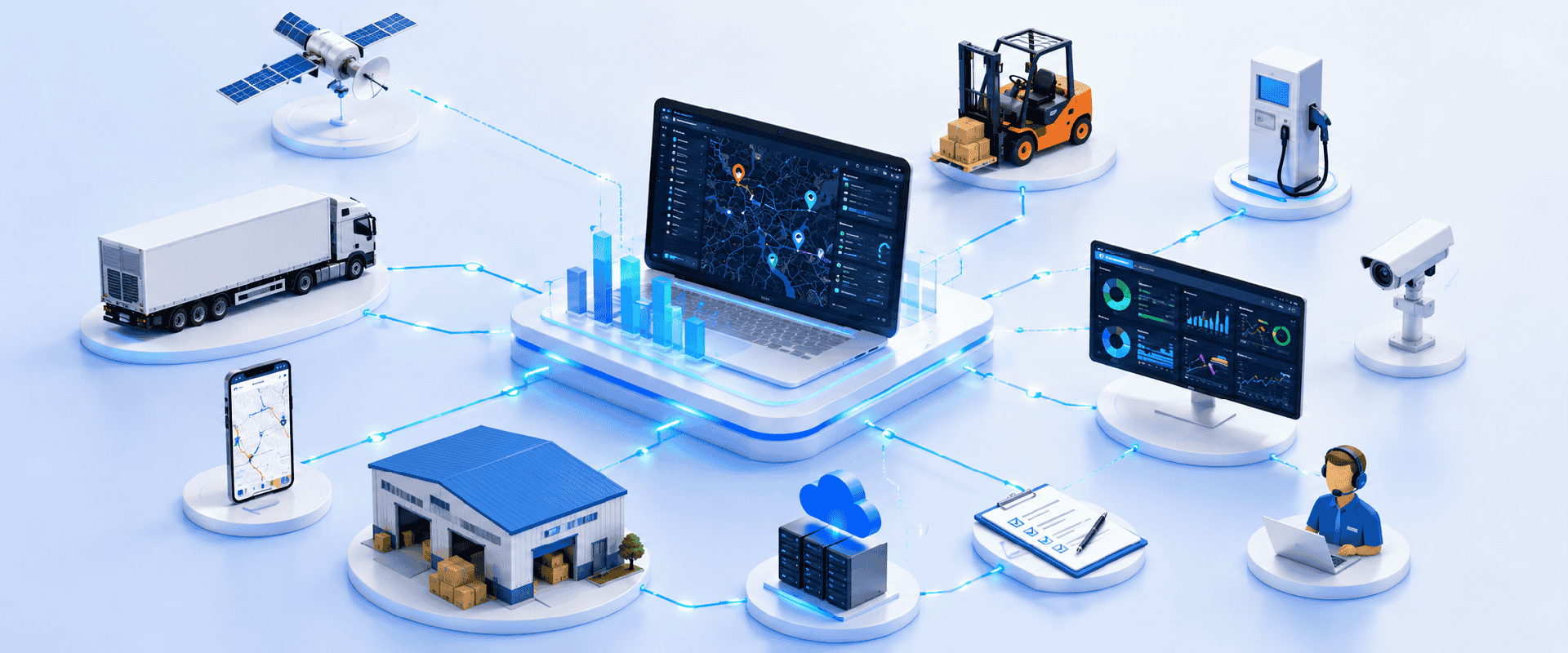
The inevitable trend for large-scale and professional transport enterprises is to move toward a unified management ecosystem. Only when the data flow—from order intake, dispatch optimization, and route monitoring to financial reconciliation and business intelligence (BI) reporting—is seamlessly connected, can enterprises radically optimize their cost structures and enhance operational capabilities.
Real-world metrics: Logistics enterprises adopting a comprehensive digital transport management model record up to a 15% - 20% reduction in operating costs, a 25% increase in fleet utilization, and a significant optimization of the accounts receivable cycle.
Sota Solutions – The strategic technology partner for professional transport enterprises
Accompanying logistics enterprises on the roadmap to enhancing management capabilities and optimizing costs, Sota Solutions is a professional provider in consulting and implementing comprehensive digital transformation.
We offer a comprehensive, intelligent transportation enterprise management solution that is deeply standardized according to operational characteristics in Vietnam:
- Unified system architecture: Synchronously integrating fleet management processes, transportation management systems (TMS) optimization, corporate financial management, accounting, and human resources onto a single, unified platform.
- Business intelligence dashboards (BI dashboard): Providing real-time performance indicators (real-time KPIs) on per-trip costs, driver performance, and the profit margin of each route, supporting the board of directors in making accurate strategic decisions.
- Standardizing B2B competitiveness: Helping enterprises optimize service processes, tightly control service level agreement (SLA) commitments, and build a position as a trusted partner for shippers and multinational corporations.
With a team of experts possessing extensive hands-on experience in the technology and logistics industries, Sota Solutions is committed to delivering highly feasible technology solutions, optimizing investment roadmaps, and ensuring maximum ROI for enterprises.
Conclusion
Managing road freight with a focus on cost optimization and process automation is no longer an optional solution, but a core competency that determines the survival of today's logistics enterprises. Proactively adopting technology and building a synchronized digital management platform is the key for businesses to break through and achieve sustainable growth.
To learn more about the digital transformation model that fits the scale and characteristics of your enterprise, contact the experts at Sota Solutions today!