In a volatile B2B business environment, the logistics and supply chain industry is witnessing a significant shift from transactional-based to relationship-based models. Leveraging the existing customer base is not merely a matter of cost-effectiveness but a core strategy for maintaining cash flow stability.
According to operations management research, increasing customer retention by just 5% can lead to a profit boost of 25% to 95%. For freight forwarders and logistics service providers (3PLs/4PLs), a CRM system is no longer just information management software; it must be a strategic tool that generates a competitive advantage through the following six essential features.
1. Centralized data systems and 360-degree customer profiles
The foundation of driving revenue from existing customers begins with a deep understanding of their behavior. In the logistics industry, customer data is often fragmented across various departments: Sales holds contact information, Operations (Ops) manages shipping schedules, and Accounting tracks receivables and debt status.
A specialized logistics CRM must be capable of consolidating these disparate data sources to create a centralized data system (a unified database).
- Route History Analysis: Identify a customer’s primary shipping lanes to offer preferential bulk rates or volume-based pricing strategies.
- Strategic Customer Segmentation: Categorize clients using the RFM model (Recency, Frequency, Monetary) to concentrate resources on the segments that provide the highest value.
- Multi-level Contact Management: In the B2B sector, the final decision-maker is often not the person handling day-to-day operations. A CRM needs to map and store the partner's organizational structure, allowing Sales teams to tailor their engagement strategies for both the operational and executive levels.

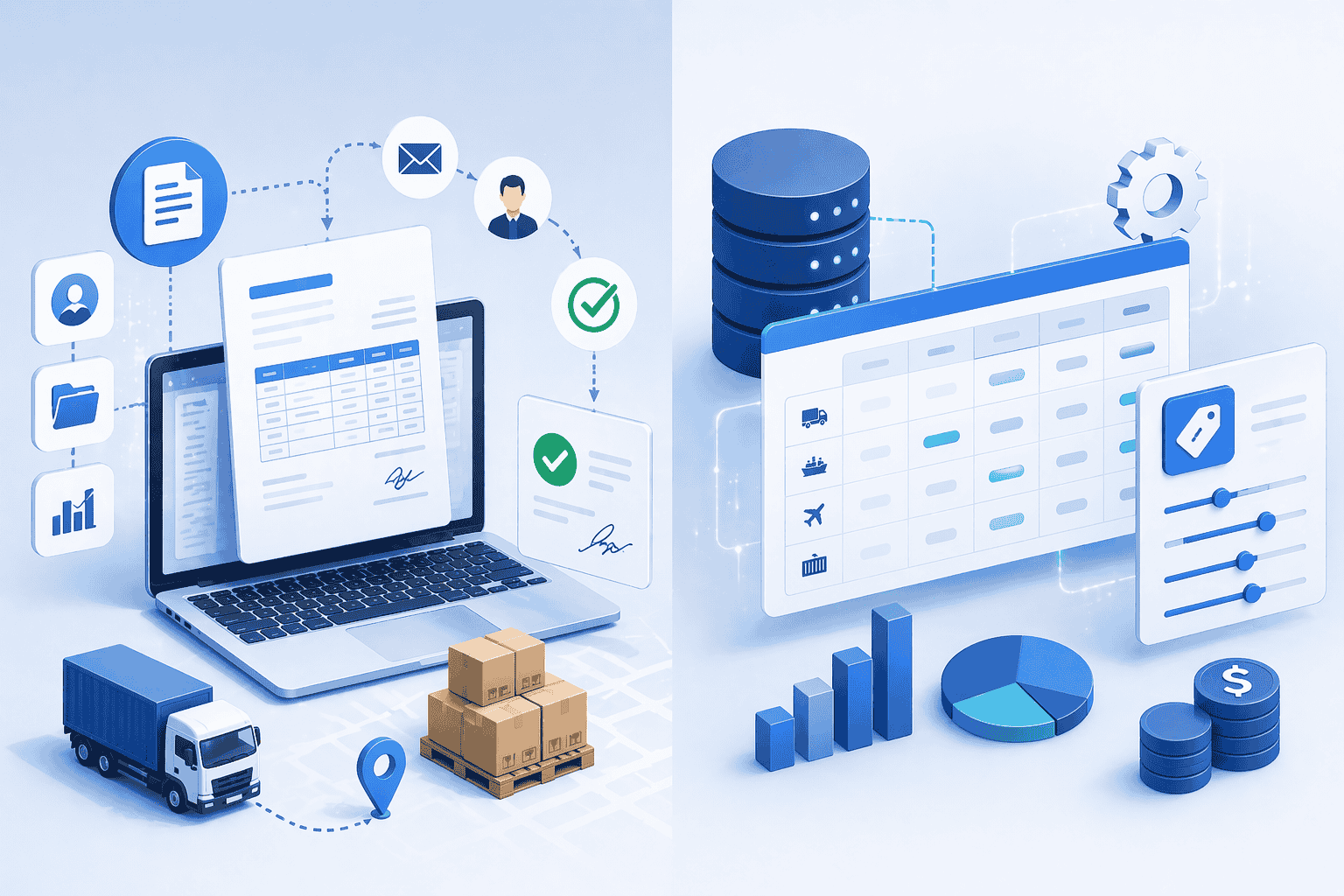
2. Quotation digitalization and rate management
The speed of quote response is a pivotal factor in retaining existing customers. When a partner requests a quote for a new lane, excessive time spent looking up local charges or waiting for managerial approval creates a competitive gap that rivals can exploit.
Smart quotation management features empower businesses to:
- Quote automation: Establish quotation templates and automated cost-calculation rules based on weight, dimensions, and modes of transport.
- Quote performance tracking: The CRM records the history of both accepted and rejected quotes, enabling management to analyze underlying causes and adjust pricing strategies in real-time.
- Online approval workflows: Streamline internal processes to ensure quotes are delivered to clients in the shortest possible timeframe (real-time).
3. Interaction management and proactive customer care
Revenue growth from existing clients is typically driven by Upselling (offering premium services) or Cross-selling (selling complementary services such as warehousing, cargo insurance, or customs clearance). To execute this effectively, businesses require systematic interaction management features.
Rather than waiting for a client to initiate a request, a CRM empowers businesses to adopt a proactive stance through:
- Automated Reminders: Triggering alerts for sales representatives when a specific account has not placed a new order within a 30-day window.
- Omnichannel Interaction History: Centralizing data from emails, phone calls, and face-to-face meetings to ensure every communication remains consistent and maintains professional continuity.
- Nurturing Campaigns: Automatically distributing periodic market insights, regulatory or border policy updates, and freight cost optimization solutions to keep the brand top-of-mind.

4. Data-Driven demand forecasting (predictive analytics)
This is a breakthrough feature that enables logistics providers to optimize revenue growth. By applying analytical algorithms to historical data, the system can forecast future customer shipping demands with high accuracy.

Predictive metric | Business benefits |
Seasonality | Proactively secure bookings with shipping lines and airlines to ensure space availability and competitive rates for clients. |
Churn prediction | Identify early warning signs of sudden volume drops to implement timely retention strategies. |
Expansion potential | Detect high-growth customers to propose more comprehensive, end-to-end supply chain solutions. |
5. Operational integration ecosystem
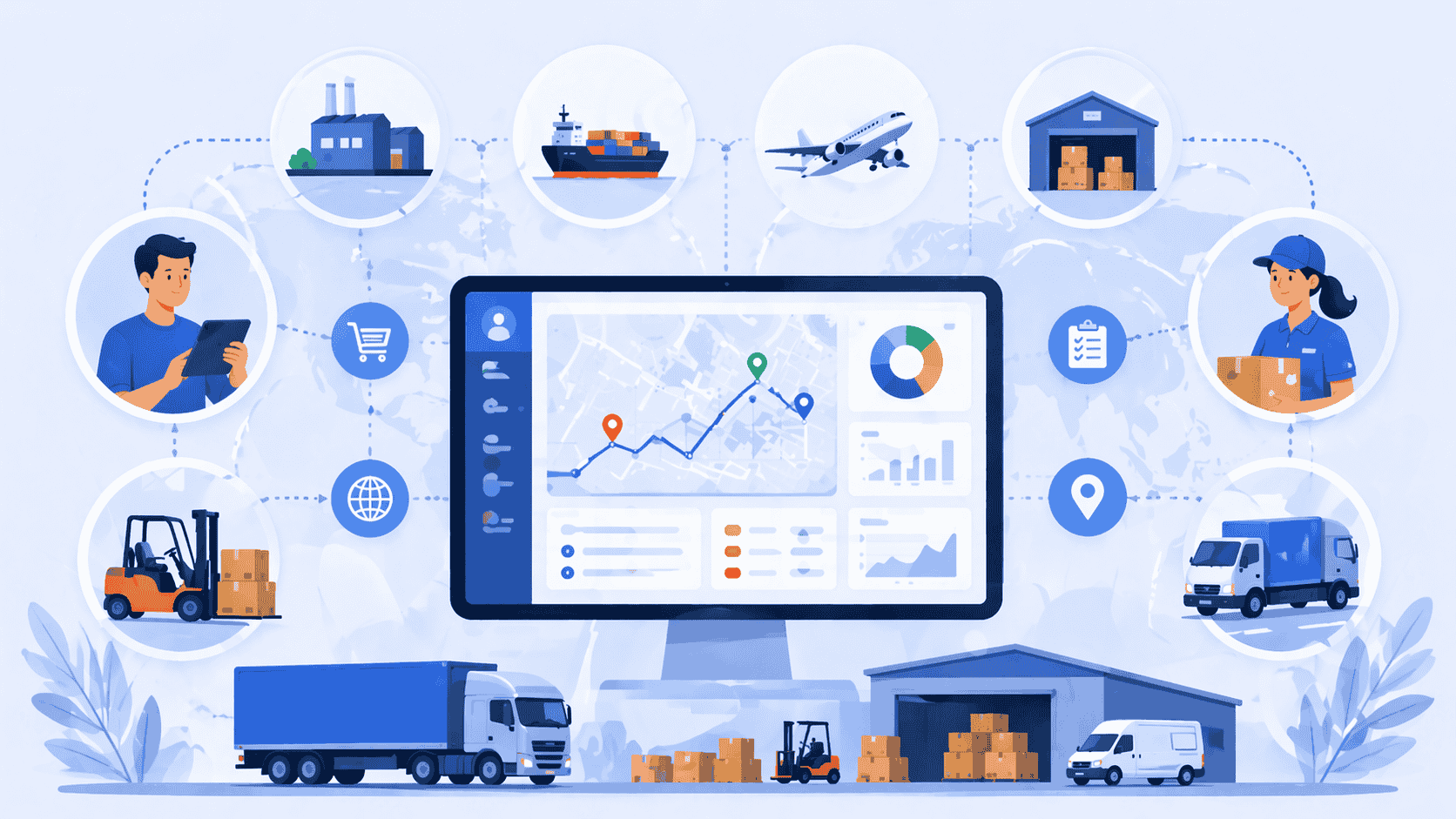
A common pitfall for many enterprises is viewing CRM as a stand-alone island. To effectively drive revenue from existing clients, sales representatives must have full visibility into real-time cargo status to provide the most accurate consultation.
Integrating a CRM with existing TMS (Transport Management System) or WMS (Warehouse Management System) provides several key advantages:
- Real-time order visibility: Sales teams can instantly provide shipment tracking updates without the need to cross-check with dispatch or operations departments.
- Immediate credit control: Automatic alerts are triggered if a customer exceeds their credit limit before a new order is processed, significantly mitigating financial risks.
- Resource optimization: By eliminating manual data entry across disparate systems, employees can dedicate more time to high-value activities such as strategic consulting and sales.
Selecting industry-specific technology for logistics
In any digital transformation roadmap, choosing a solution tailored to the unique requirements of the industry is a decisive factor for success. Rather than adopting generic CRM systems with redundant features, many leading enterprises now prioritize specialized solutions like Sota CRMlog by Sota Solutions. This system is specifically developed to standardize freight quotation processes, manage partner relationships, and optimize sales funnels for freight forwarders—effectively converting customer data into tangible revenue with a professional edge.
6. Management reporting and performance metrics (BI & Analytics)
To effectively scale revenue, managers require actionable insights—data that tells a story. A robust CRM must provide multi-dimensional reporting systems to evaluate the "health" of the existing customer base.
Key metrics to monitor include:
- CLV (Customer Lifetime Value): The total projected revenue a customer generates throughout their entire partnership with the business.
- Share of Wallet: The percentage of a customer's total logistics spend that is allocated to your services versus their overall market requirement.
- Retention Rate: The ratio of customers who continue to utilize your services over consecutive business cycles.
- Cross-selling Rate: The percentage of clients utilizing value-added services (such as warehousing or insurance) beyond core transportation.
Conclusion: Shifting mindsets for revenue breakthroughs
Investing in a logistics CRM is more than a software procurement; it is a fundamental restructuring of management philosophy toward a customer-centric model. By focusing on these six essential features, enterprises can build a formidable barrier against price-based competition while establishing a foundation for sustainable growth rooted in customer satisfaction and loyalty.
In the digital era, data is the asset, and CRM is the engine that converts that asset into profit. Organizations that master their customer data and interaction processes will hold the key to long-term success in the global supply chain.