How many minutes does an average Operations (OP) staff spend manually entering a Bill of Lading (B/L) and an invoice into the system? In traditional forwarding firms, the answer is typically 10 to 15 minutes—not to mention the inevitable errors under high-pressure workloads. In 2026, as logistics profit margins continue to shrink, wasting resources on such manual tasks has become a significant "cost leak."
The solution is not about hiring more people, but about shifting our data processing mindset. AI-integrated OCR technology has emerged to transform stacks of paper documents and static PDF files into digital data that can "speak for itself"."
1. The shift: from traditional OCR to AI-Powered OCR
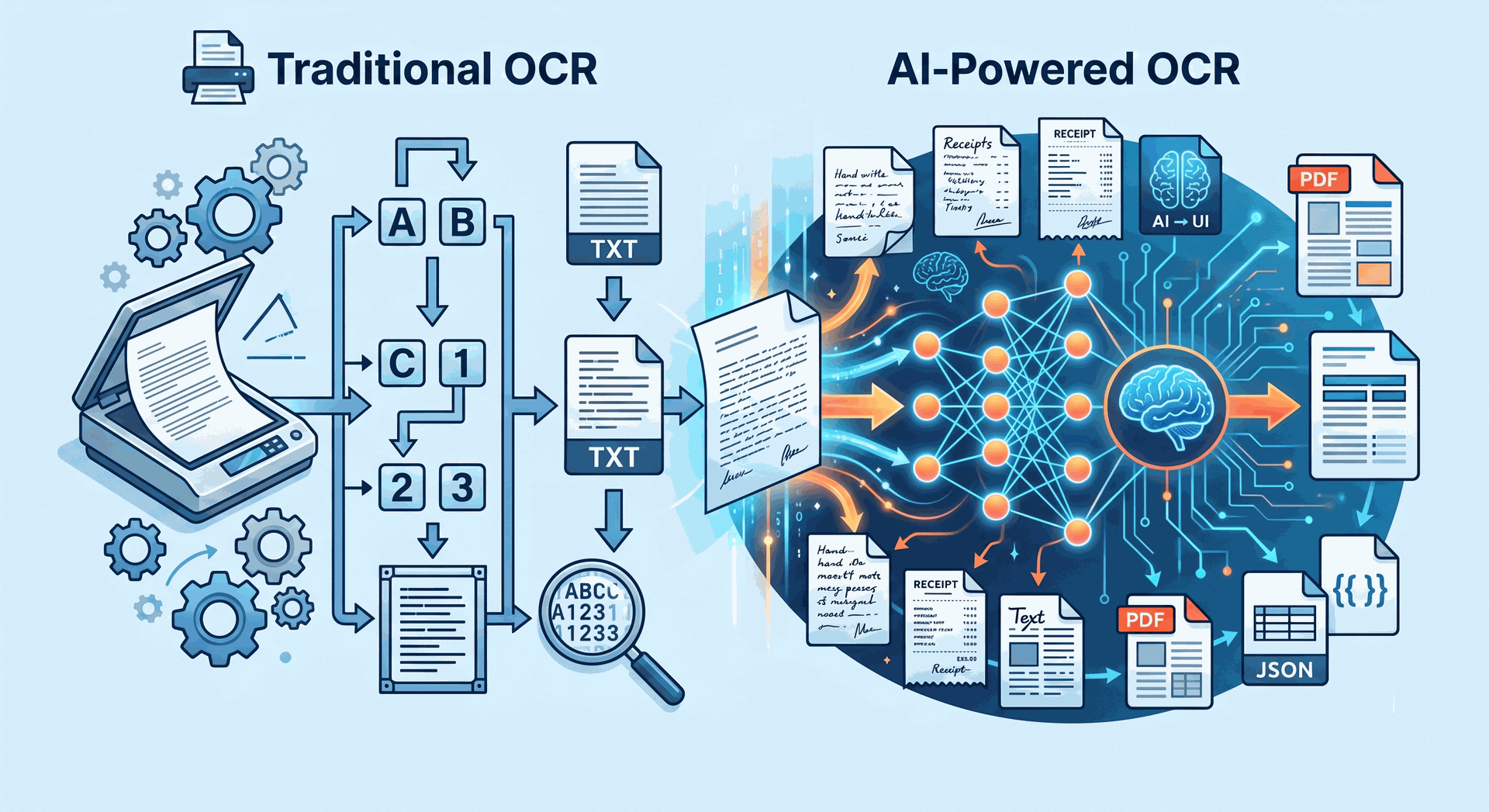
Previously, OCR (Optical Character Recognition) technology was merely about "capturing images and reading text." Older OCR generations operated on rigid, template-based rules. If a supplier's invoice layout shifted even slightly, the system would immediately fail.
Entering 2026, global logistics trends have shifted toward AI-Powered OCR (also known as IDP - Intelligent Document Processing). This represents a quantum leap in technology:
- Machine learning capabilities: AI no longer requires humans to specify "this box is the invoice number." It learns the structures of thousands of types of invoices and bills of lading from global shipping lines and airlines. Even if formats change, the AI can still find the necessary data.
- Contextual understanding: Leveraging Natural Language Processing (NLP), AI distinguishes between "Invoice Date" and "Due Date" based on the surrounding context rather than just its position on the page.
- Handling "Noisy" data: A reality in logistics is that documents often come as phone photos taken in low light, or scans that are tilted, blurred, or have stamps overlapping the text. Modern AI OCR can denoise and reconstruct characters to achieve near-perfect accuracy.
2. Real-world challenges solved by OCR in the supply chain
In Forwarding and Transportation, data is the lifeblood. OCR directly impacts the three most critical types of documents:
2.1. Automating Bill of Lading (B/L)
The Bill of Lading is the "soul" of every shipment, yet it possesses the most complex structure with dozens of data fields: B/L number, Container number, Seal number, Gross Weight (G.W), Volume (CBM), Port of Loading (POL), Port of Discharge (POD)... Manual extraction is not only slow but also carries a high risk of error. OCR pushes data directly into management systems in seconds, ensuring information "flows" faster than the goods themselves, thereby shortening customs clearance time and accelerating cargo release.
2.2. Processing commercial invoices and packing lists
With hundreds of SKUs on a single Packing List, data entry is a nightmare for documentation staff. AI OCR excels at table extraction, automatically stripping each line item, unit price, HS code, and quantity. This not only speeds up accounting reconciliation but also supports more accurate automated customs declarations.
2.3. Payment documents and debit notes
Debt management in Logistics is often difficult due to the vast number of suppliers (shipping lines, warehouses, trucking companies, agents...). OCR automatically reads charges on Debit Notes and reconciles them with the original Quotation to immediately detect any irrational income or expenses.
3. Economic benefits: the numbers behind the technology
Why are global logistics giants like DHL and Maersk, alongside Vietnamese forwarders, racing to invest in OCR?
- 70-80% Time Savings: Instead of 15 minutes per file, OCR takes only 30 seconds. This allows a single employee to handle 3 to 4 times the typical workload.
- Reducing Operating Expenses (OpEx): It minimizes the need for additional headcount in pure data-entry roles. Businesses can shift personnel to higher value-added departments such as Customer Service or Business Development.
- Up to 99% Accuracy: Humans may make typos when fatigued, but AI does not. Reducing errors means minimizing fines from incorrect customs declarations or payment discrepancies.
- Faster Capital Turnover: When invoices are processed quickly and debts are reconciled early, the company’s cash flow circulates much more efficiently.
4. Sota FMS: A pioneer in integrating AI OCR into logistics management systems
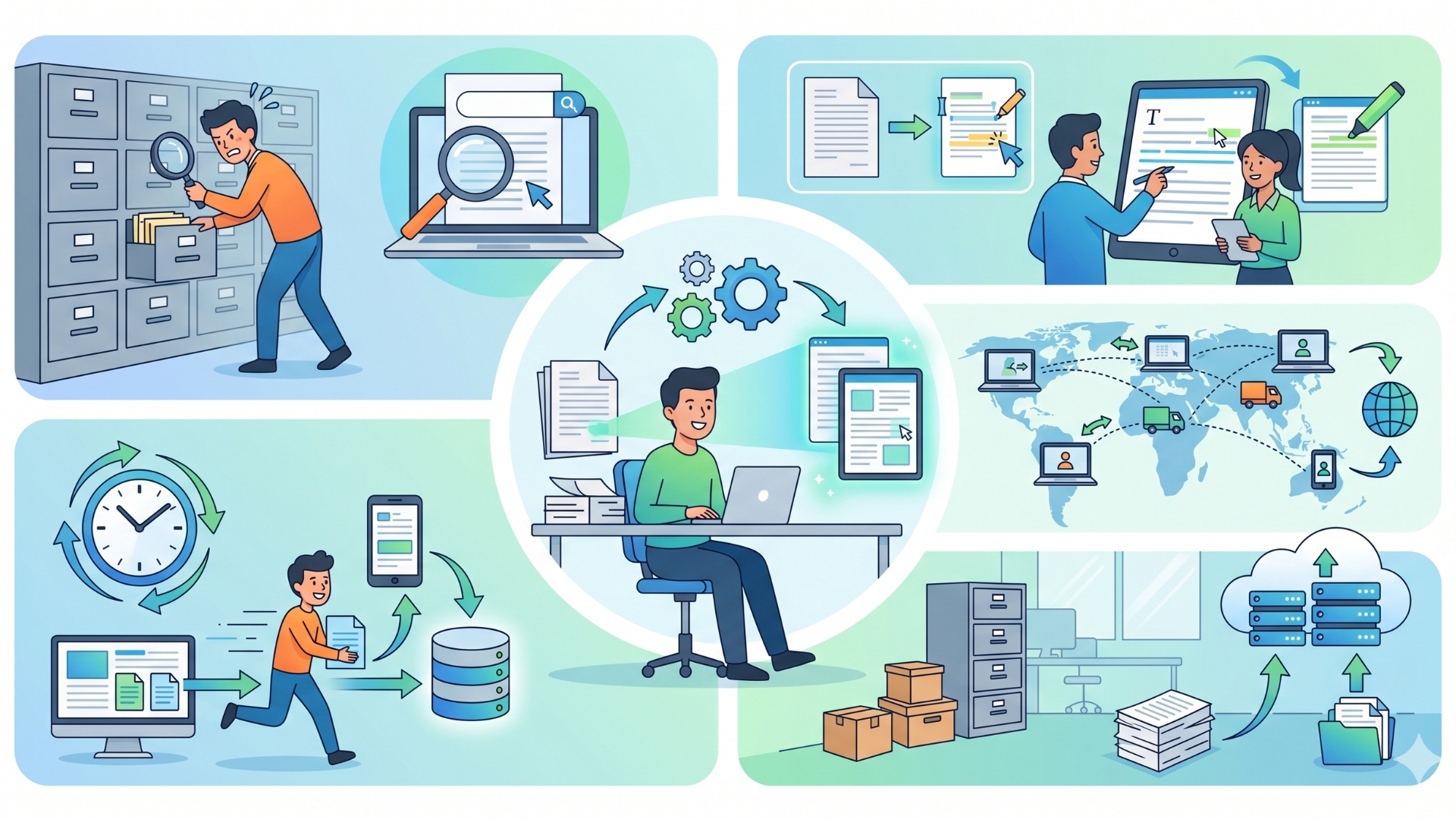
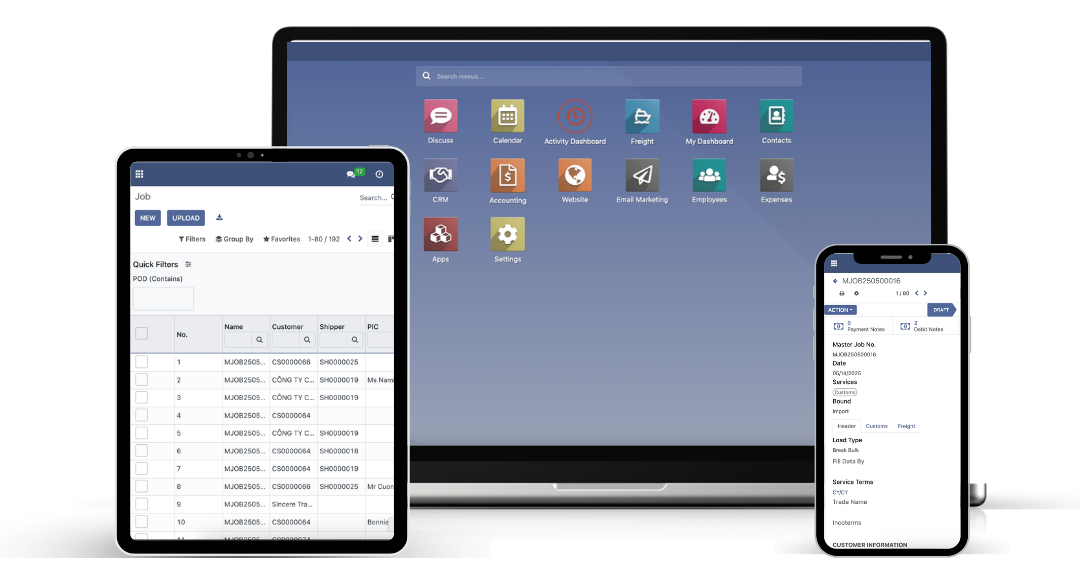
In the Vietnamese logistics software market, Sota FMS (a strategic product of Sota Solutions) has established its pioneering position by deeply integrating AI OCR technology into its core system. Far from being a fragmented add-on tool, Sota Solutions has transformed AI OCR into a vital link within the Workflow Automation process, optimizing every data touchpoint for operations staff.
When a Forwarder utilizes Sota FMS, the power of AI OCR is flexibly demonstrated through real-world scenarios:
- Automated Job Creation from Bookings and Bills: By simply selecting a Booking or Bill file from shipping lines or airlines, the system automatically identifies the document type and extracts core data fields to initialize a complete new Job. Staff no longer need to manually type port codes, flight/voyage numbers, or vessel names.
- Data Recognition and Matching for Existing Jobs: For shipments already created, AI OCR supports reading and reconciling information from newly uploaded documents to identify the correct corresponding Job, ensuring all data is updated accurately and synchronized in real-time.
- Intelligent Information Filling on Bill Screens: Right within the detailed Bill management screens, OCR technology allows for the automatic extraction and filling of missing information. The system scans through scans or PDF files to "populate" professional data fields, ensuring shipment records are always complete and standardized without manual effort.
- Data Discrepancy Alerts: The system automatically compares information extracted from OCR with previously declared data. Should any contradictions arise regarding container numbers, weight, or costs, Sota FMS issues an instant alert to prevent error risks right at the input stage.
This milestone by Sota FMS is not merely a feature update; it is a profound understanding of the "pain points" businesses face in data standardization. With Sota FMS, the dream of a "paperless office" and "error-free operations" is becoming more realistic than ever for Vietnamese Forwarding enterprises.
5. Challenges in OCR implementation and how to overcome them
Despite the numerous benefits, implementing OCR is not always a smooth process. Businesses should take the following considerations into account:
- Input Document Quality: Low-quality faxes or overly blurry photos remain a significant challenge. The solution lies in utilizing Image Pre-processing technologies to enhance clarity before the recognition stage.
- Data Security: Logistics documents contain highly sensitive information regarding pricing and customer details. Therefore, prioritizing platforms with international security certifications and stable server infrastructures is paramount.
- Shifts in Work Culture: Employees may fear being replaced by AI. It is essential to communicate effectively that OCR acts as an "assistant," liberating them from tedious, repetitive tasks so they can focus on higher-level professional expertise.
6. Vision 2026-2030: OCR and the smart logistics ecosystem
In the near future, OCR will no longer stand as an isolated tool. We will witness a powerful convergence of:
- OCR + Blockchain: Once extracted from original documents, data will be hashed and stored on a Blockchain to ensure absolute transparency and immutability across the global supply chain.
- OCR + RPA (Robotic Process Automation): Digital robots will utilize data provided by OCR to autonomously execute tasks on customs portals or shipping line websites without the need for human intervention.
- Predictive Analytics: The massive datasets generated by OCR will serve as invaluable "fuel" for AI to analyze market trends, forecast freight rate fluctuations, and predict customer behavior.
Conclusion
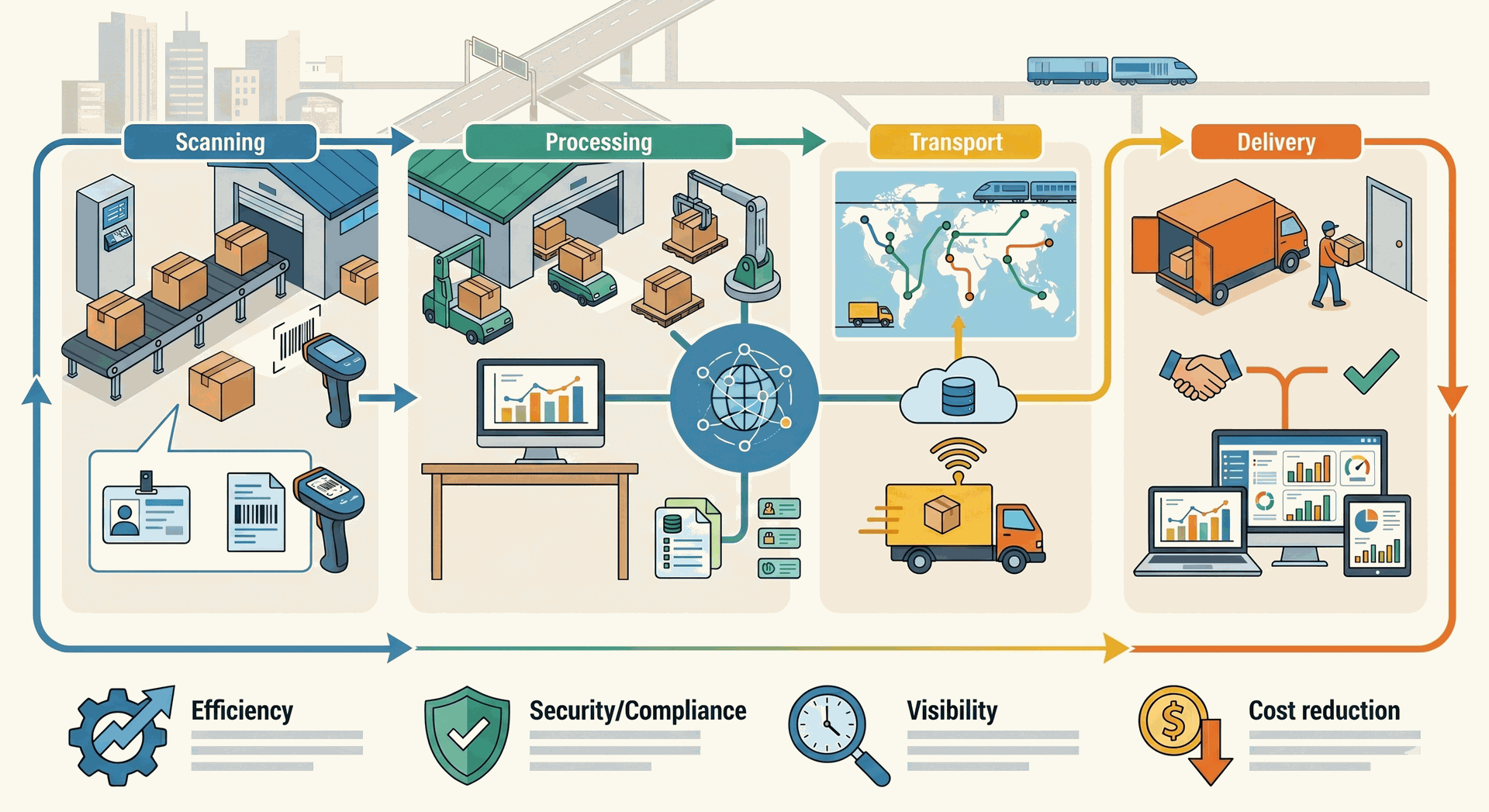
The OCR revolution in logistics is unfolding more powerfully than ever. It is far more than just character recognition technology; it is the foundation of trust and speed. For forwarding enterprises, delaying the adoption of document automation is equivalent to forfeiting your own competitive advantage.
Practical solutions with deep local expertise like Sota FMS serve as the bridge helping businesses access global technology in the most seamless and effective way. Let AI handle the repetitive tasks, so that humans can focus on creating breakthrough values.
References:
- Gartner: Market Guide for Intelligent Document Processing (IDP) 2025.
- DHL Trend Radar: AI and Machine Learning in Supply Chain Operations.
- Vietnam Logistics Report 2025: Digital Transformation Trends and Emerging Technology Applications - Ministry of Industry and Trade (MoIT).
- Logistics Management: How OCR is reshaping the Freight Forwarding landscape (2026).