In the B2B business model, a delayed delivery shipment goes far beyond a standard service complaint; it directly threatens the continuity of the partner's supply chain, leading to risks of costly contractual penalties and severe damage to brand reputation. As a business scales, manual management methods or the use of fragmented software will expose systemic management loopholes, severely undermining operational control.
A Transportation Management System (TMS) serves as the foundation for establishing transparency and precision in freight flows. However, amidst a maze of market solutions, distinguishing between a system capable of being tailored to a company's specific processes and an impractical tech solution remains a challenging puzzle for executives. The following framework of 10 core evaluation criteria serves as a standardized benchmark to help businesses filter options and optimize their technology investment decisions.

1. Route optimization Algorithms
The primary criterion determining the ROI (Return on Investment) of a TMS system is the processing capability of its routing algorithm.
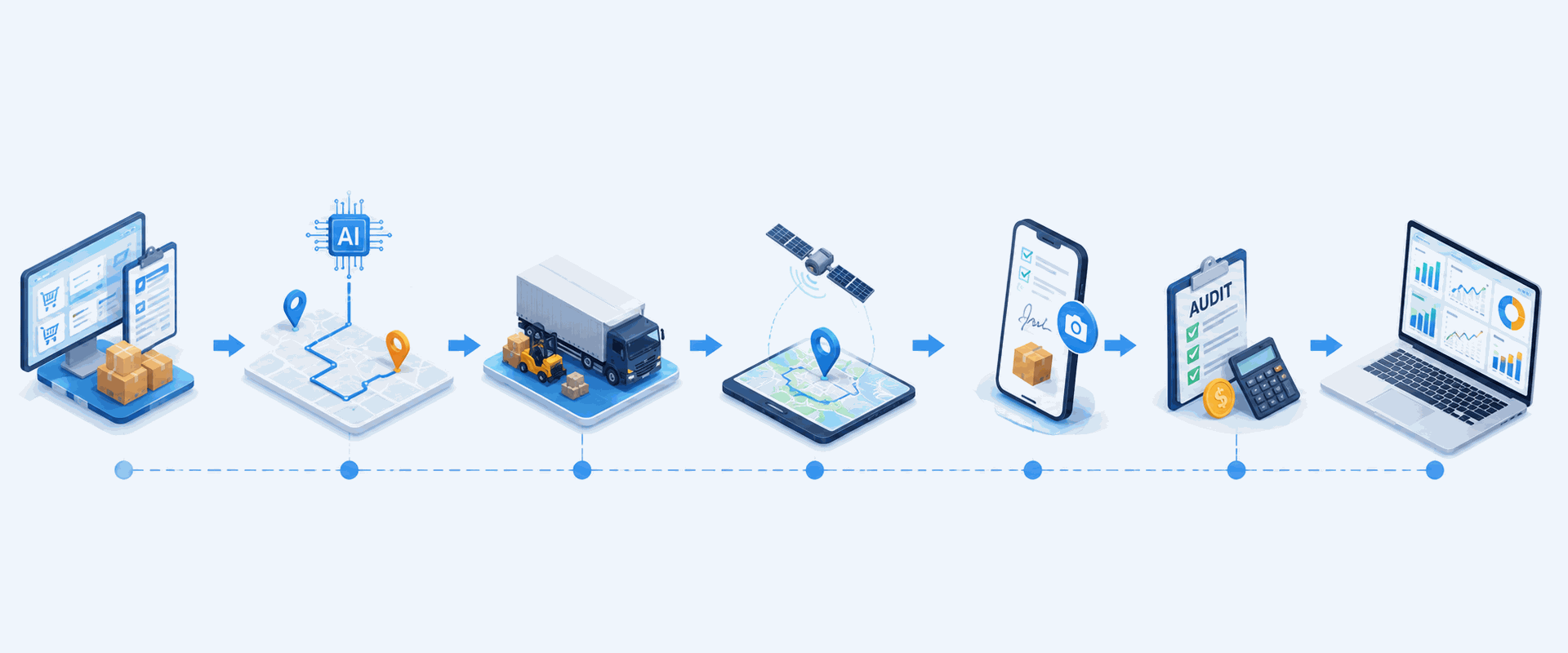
- Technical Requirements: The system must be capable of automating delivery planning based on multi-variable inputs: vehicle payload capacities, geofenced weight/time restrictions, receiving warehouse operating hours, and real-time traffic density.
- Management Value: Minimizes transit mileage, reduces fuel consumption, and maximizes order density per shipment.
2. Real-time tracking & visibility
In the B2B business model, a delayed delivery can disrupt a partner’s entire production line. Consequently, real-time transit monitoring is a mandatory capability.
- Technical Requirements: Deep integration with telematics (GPS/fleet tracking devices) and environmental sensors (temperature, humidity - if required). The system must provide continuous shipment status updates and automatically trigger alerts for route deviations or variations in Estimated Time of Arrival (ETA).
- Management Value: Transitions the management model from reactive troubleshooting to proactive risk mitigation.
3. Fleet & carrier management
Many B2B enterprises manage a combination of an in-house fleet and outsourced 3PL/4PL providers to maintain capital flexibility. The TMS must possess the capability to orchestrate this hybrid structure.
- Technical Requirements: The TMS must integrate two independent yet synchronized modules: internal asset lifecycle management (covering maintenance schedules, repair costs, and compliance licensing) and a dedicated Carrier Portal. This framework must support automated spot bidding and shipment allocation based on carrier performance analytics and pre-negotiated rate cards.
4. Freight audit & Payment automation
Manual freight cost management is a primary driver of financial leakage due to the highly complex nature of incidental surcharges, such as detention, demurrage, tolls, and waiting fees.
- Technical Requirements: The system must support multi-model rate engine configurations (based on weight, volume, distance, or geographic zones). It must automatically reconcile carrier invoice data against system-generated cost estimates (Freight Auditing) to identify discrepancies prior to payment approval.
- Management Value: Eliminates human error, reclaims dozens of administrative hours monthly, and prevents financial leakage.
EXPERT ADVICE:
Do not simply select the software with the most features; prioritize a solution capable of being tailored and flexibly customized to your enterprise's specific operational workflows.
5. System integration capabilities
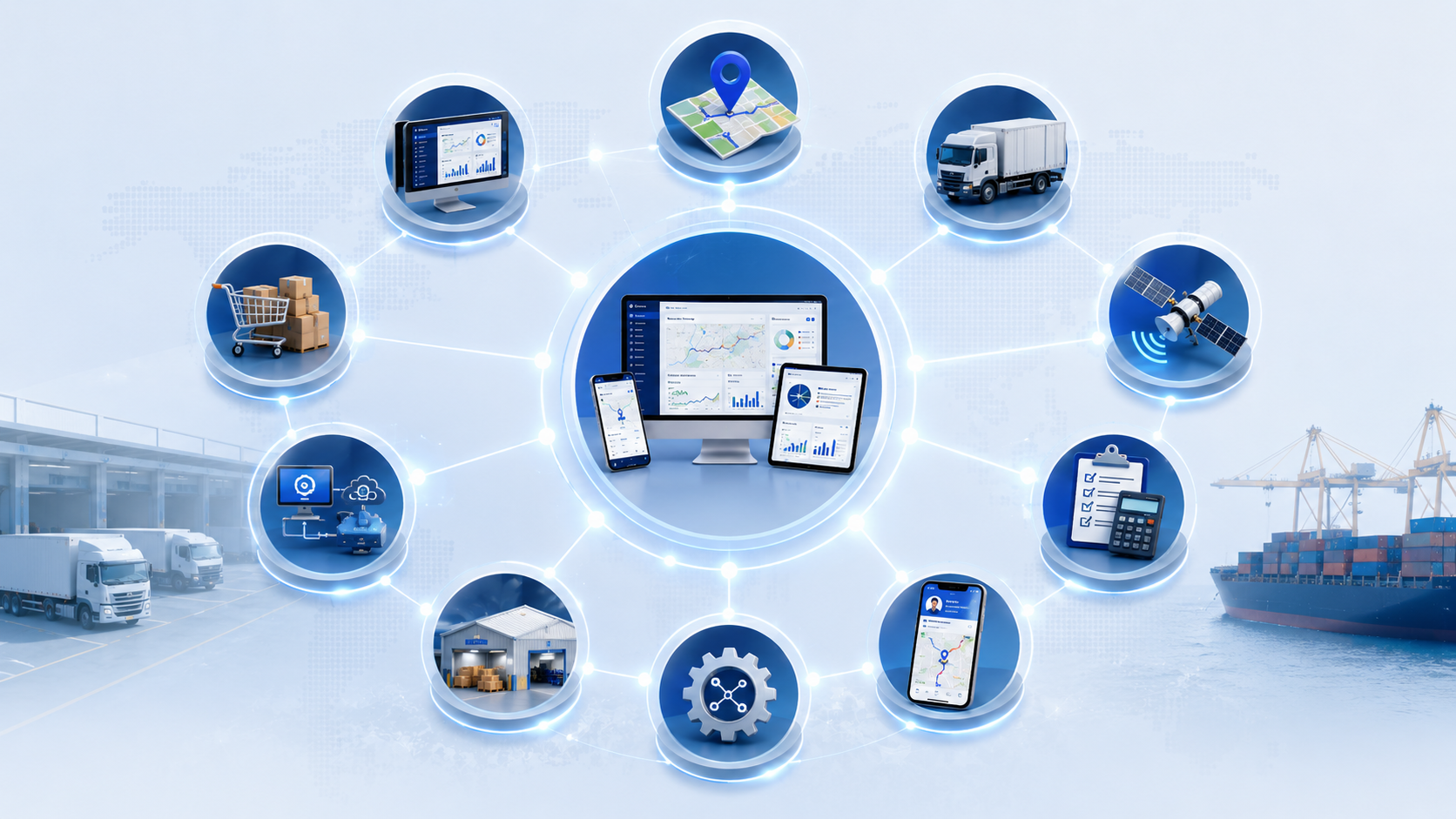
A TMS cannot operate in isolation; it must function as an integral component of the enterprise's broader technology ecosystem.
- Technical Requirements: The platform must feature an open API architecture, enabling seamless integration with core management systems such as ERPs (SAP, Oracle, Odoo, etc.), Warehouse Management Systems (WMS), and Order Management Systems (OMS). Data pipelines between these platforms must maintain strict integrity and update in real time.
- Giá trị quản trị: Đảm bảo dòng chảy dữ liệu thông suốt, không bị ngắt quãng và tránh việc phải nhập liệu thủ công trên nhiều nền tảng khác nhau.
6. Management reporting & Advanced analytics
Clean data serves as the foundation for executive leadership to execute strategic supply chain restructuring decisions.
- Technical Requirements: Provide intuitive dashboards for Key Performance Indicator (KPI) visualization. The system must deliver deep analytical deep-dives into metrics including On-Time In-Full (OTIF) rates, freight cost per product unit/kilometer, and vehicle capacity utilization (Asset Utilization).
KPI Metric | B2B Management Objective | TMS Control Capability |
OTIF Rate (On-Time In-Full) | Measures service quality and SLA compliance committed to partners. | Automatically captured via ePoD and reconciled in real time. |
Cost per Ton/Kilometer | Optimizes the variable cost structure of transportation activities. | Aggregated automatically from the Freight Audit module. |
Capacity Utilization | Minimizes empty miles on return legs (Backhaul optimization). | Intelligent algorithms automatically consolidate freight and link routes. |
7. User experience (UX/UI) & Driver mobile applications
Regardless of how sophisticated its underlying algorithms are, software will ultimately fail if end-users (dispatchers and drivers) reject adoption due to an overly complex interface.
- Technical Requirements: A dedicated mobile application for drivers featuring a minimalist interface that remains fully stable under poor network connectivity. The Electronic Proof of Delivery (ePoD) functionality must support digital signatures, photo capture of cargo conditions, and instantaneous synchronization back to the control tower.
8. Scalability & Flexibility
As an enterprise scales its business operations, increases cargo throughput, or expands its distribution network, the underlying technology infrastructure must adapt accordingly.
- Technical Requirements: The software must be engineered on modern architectures (such as Microservices or Cloud-native models), allowing for the expansion of storage capacity, user seats, and connected vehicles without degrading system processing speeds.
9. Data security & Information protection
Customer data, delivery routing, and pricing structures represent highly sensitive corporate assets for B2B enterprises. Any data breach can result in severe financial and reputational liability.
- Technical Requirements: The system must comply with global security standards (such as ISO 27001 or equivalent) and implement strict encryption for both data-in-transit and data-at-rest. Furthermore, role-based access control (RBAC) functionalities must be granular down to specific individual data fields.
10. Implementation capability & Service commitments (Vendor Capability & SLA)
Procuring a Transportation Management System is fundamentally a long-term partnership commitment. The success or failure of the project depends up to 50% on the domain expertise and execution capabilities of the implementation partner.
- Core Requirements: The solution provider must possess proven implementation experience within your specific industry vertical, backed by a structured assessment, design, and training methodology. Service Level Agreements (SLAs) regarding system response times and technical incident resolution must be clearly defined to ensure operational continuity across the supply chain.
Intelligent Transportation Management Solutions by Sota Solutions
To support B2B enterprises in decisively resolving these operational challenges, Sota Solutions delivers professional consulting and deployment services for transportation management systems. The Sota TMS solution is purpose-built with highly customizable capabilities and flexible integration features to blend into a company's existing IT ecosystem—fully automating transportation workflows and optimizing logistics expenditures across every single mile.
Conclusion
Selecting a Transportation Management System (TMS) is a long-term strategic investment decision. By strictly adhering to this 10-criterion evaluation checklist, enterprises can minimize the risks of system misalignment, ensure a smart allocation of capital, and establish a powerful launchpad for a modernized supply chain.
Is your enterprise positioned to digitalize its transportation workflows? Evaluate your legacy systems and prepare for your digital transformation journey today.